

Scuba Diving in Goa: The Ultimate Guide Before You Book
What you should know about prices, safety, training, dive sites, equipment and the real difference between a ₹2,000 package and a professional scuba experience
Table of Contents
- What is being sold as scuba diving in Goa?
- What does the popular budget scuba package actually look like?
- What does a proper beginner scuba experience look like?
- Why does equalisation matter?
- What if you are scared?
- Do you need to know how to swim?
- How deep do you actually go?
- How long do you actually stay underwater?
- Beginner diver vs certified fun diver
- Where do you actually go scuba diving in Goa?
- What about underwater visibility?
- What marine life can you see?
- What equipment do you get?
- How crowded is the professional dive boat?
- What does the instructor actually do during the dive?
- What happens if the weather changes?
- What about underwater photography?
- What does professional scuba diving in Goa cost?
- ₹2,000 vs ₹7,000: what are you actually comparing?
- Which scuba diving experience should you choose?
- 15 questions to ask before booking
- FAQ
Scuba diving is one of those experiences that looks deceptively simple when you see it advertised online.
You search for scuba diving in Goa and you may find packages for ₹1,500, ₹1,800 or ₹2,000 that appear to include almost everything imaginable.
Scuba diving. Underwater photography. Parasailing. Jet ski. Banana boat. Bumper boat. Speed boat. Dolphin spotting. Sightseeing. Lunch. Snacks.
All in one day.
Then you come across a professional scuba experience costing ₹6,000 plus GST, or ₹7,000 per person.
Naturally, the question is:
Why would anyone pay almost four times as much?
The answer isn't simply that one is "premium" and the other is "cheap".
The two products can be fundamentally different experiences.
This guide is designed to help you understand what you are actually buying before you book. We are not here to tell you that everyone needs to spend ₹7,000 on scuba diving.
If your priority is fitting as many activities as possible into one inexpensive day, a combination package may suit your budget.
But if your priority is to actually experience scuba diving, it is important to understand what a professionally operated dive involves and why it costs more.
First, understand what is being sold as "scuba diving" in Goa
One of the most popular products you will encounter in Goa is the Scuba Plus Water Sports Combo.
It is commonly advertised at around ₹1,500 to ₹2,500 per person, depending on the operator and package.
The attraction is obvious.
For that price, you may be offered:
- Scuba diving
- Underwater photos and videos
- Parasailing
- Jet ski
- Banana boat
- Bumper boat
- Speed boat
- Dolphin spotting
- Sightseeing
- Lunch
- Snacks
- Pickup and drop from North Goa
On paper, it sounds almost too good to be true.
And this is where you need to understand the difference between the number of activities included and the amount of time you actually spend experiencing each activity.
What does the popular budget scuba package actually look like?
The typical day starts around 8 AM and can finish around 4 or 4:30 PM.
That sounds like a full day of activities.
In reality, much of that time can be spent travelling, waiting for your turn, transferring between activities and sitting on the boat while other guests participate.
The boat may carry around 30 to 35 people.
You are not necessarily doing each activity continuously. You wait while other people have their turn, then move to the next activity.
The water sports themselves can be extremely short. Individual rides such as the jet ski, banana boat or bumper boat may last around 10 to 15 seconds.
The scuba component can be even more revealing.
You may spend the entire day on the trip but get only around 10 minutes of actual underwater time.
That is a very different proposition from spending several hours around a dedicated dive operation and having a proper introductory dive.
What happens during the scuba part of the budget package?
In the mass-market model we have observed, there is no proper pool training before the sea dive.
You are taken to the water, given a short introduction and then taken underwater.
If you are nervous, have difficulty equalising your ears or simply don't feel comfortable, there is very little time available to work through the problem.
The underwater portion can be around 5 to 8 minutes, and the experience can be extremely shallow, around 1 to 2 metres.
At that depth, you are not really getting the same experience as exploring a dive site at meaningful depth.
This distinction matters.

Why do you sometimes see so many fish in the photographs?
There is another difference worth understanding.
Some mass-market experiences use fish feed or bait to attract fish close to the divers so that they appear in photographs and videos.
The resulting photographs can look exciting.
But the experience is being created partly by changing the animals' behaviour.
A professionally operated dive should not need to manufacture the encounter.
At the professional operation we recommend, no bait or feed is put into the water to attract marine life.
Whatever you see is what is naturally there.
The instructor or divemaster may capture photographs and video during the dive, but the marine environment is not manipulated to create the shot.
That distinction matters if you care about responsible wildlife experiences.
So what does a proper beginner scuba experience look like?
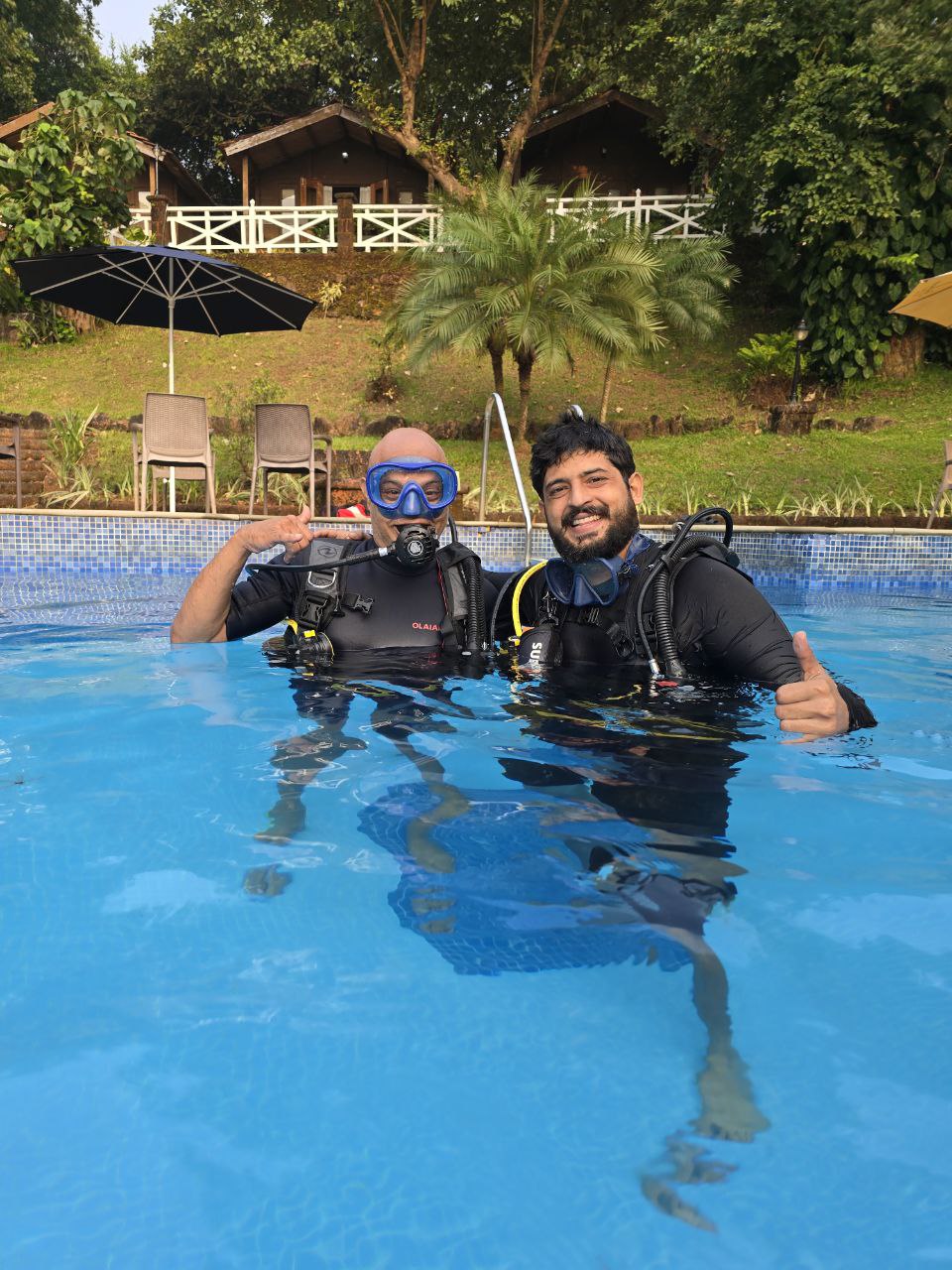
A genuine introductory scuba experience begins before you enter the sea.
For the professional experience we recommend, the day generally starts around 6:30 to 7 AM, although exact timings vary depending on the month, operator and location.
The first major part is pool training.
The training takes approximately one hour.
This is not just a formality. It gives a first-time diver the opportunity to understand the equipment and become comfortable with the basic skills before entering the sea.
The instructor covers:
- How to use the scuba equipment
- Breathing underwater
- Equalisation
- Clearing your mask
- Basic underwater hand signals
- What to do if you feel uncomfortable
- Basic emergency procedures
- Entering and exiting the water
- What to expect during the dive
This is one of the biggest differences between a proper introductory dive and the mass-market package.
You aren't simply being taken underwater.
Why does equalisation matter?
As you descend underwater, pressure increases.
Your ears need to equalise that pressure. If you cannot equalise properly, continuing to descend can be painful and potentially harmful.
This is why the pool session is useful.
The instructor can teach you the correct technique and see whether you are comfortable with it before you go into the sea.
If you have a blocked nose, blocked sinuses or another problem that prevents you from equalising, the professional approach is not to force the dive.
The dive should be skipped if necessary.
That might mean losing the day's dive, but it is far better than turning a holiday activity into a painful or unsafe experience.
What if you are scared?
Being nervous before your first dive is completely understandable.
The professional approach is to deal with the reason for the fear calmly.
The instructor works with you until you are comfortable enough to continue.
Scuba diving isn't something that should be rushed because the boat has a schedule.
You need to be calm enough to breathe, listen, communicate and enjoy what is happening around you.
If you are genuinely uncomfortable, that matters.
Do you need to know how to swim?
For the beginner experience described here, non-swimmers can participate.
Being comfortable in the water is still important, and every participant completes the required medical questionnaire and screening process.
The exact eligibility requirements can vary between diving programs and operators, so always check the requirements for the experience you are booking.
The upper age limit is not simply a number. Fitness, medical history and individual circumstances matter.
People with recent surgeries, sinus problems, a cold, vertigo or other physical concerns should disclose them during the medical screening and follow the operator's guidance.
If you have a medical condition and are unsure whether you can dive, get appropriate medical advice rather than assuming you are fit to dive.
How deep do you actually go?
At the recommended Grand Island sites, beginner dives typically reach around 8 to 12 metres, depending on the specific dive site and conditions.
That is very different from being lowered only around a metre or two below the surface for a few minutes.
At 8 to 12 metres, you are actually descending into an underwater environment and exploring it.
You have to learn to equalise.
You have to control your breathing.
You have to become comfortable with your equipment.
You are surrounded by the underwater landscape rather than simply being dipped beneath the surface for a photograph.
This is one of the reasons the two products should not be compared purely on price.

How long do you actually stay underwater?
You will often see scuba experiences advertised as a "45-minute dive".
There is an important detail behind that number.
A scuba tank contains a finite amount of air, and different people consume air at different rates.
A beginner might dive for around 40 minutes. Another person may be able to remain underwater for an hour or more.
The dive ends when the dive professional determines that it is time to return to the surface based on air consumption and safety considerations.
You don't simply stay underwater until every last bit of air has been used.
So think of 45 minutes as an approximate dive duration, not a guarantee that every person will spend exactly 45 minutes underwater.
Beginner diver vs certified fun diver
These are two different experiences.
Beginner diver
For someone who has never dived before, the professional experience includes:
Approximately one hour of pool training + one open-water dive.
The instructor stays with the beginner throughout the dive and physically guides them through the experience.
The beginner doesn't have to navigate the dive site independently.
Certified or "fun" diver
A certified diver already understands diving skills and has better buoyancy control.
For the same ₹6,000 plus GST price, the fun diver receives two tanks of air and two dives on the same trip.
The typical arrangement is one divemaster for up to three certified divers.
The divemaster leads and the certified divers follow.
This is why you should never compare a beginner package and a certified diver package simply by looking at the number of dives advertised.
The training and supervision requirements are different.
Where do you actually go scuba diving in Goa?
There are different dive locations and different standards of experience.
The mass-market operations commonly use Bat Island, while the professional experience we are discussing operates around Grand Island through certified operators.
The difference in the environment can be significant.
Bat Island
The more commercial location is closer to sandy areas, where water movement can churn up sediment.
Visibility can therefore be poorer.
It is also a more commercial and crowded environment, with a relatively shallow dive location.
Grand Island
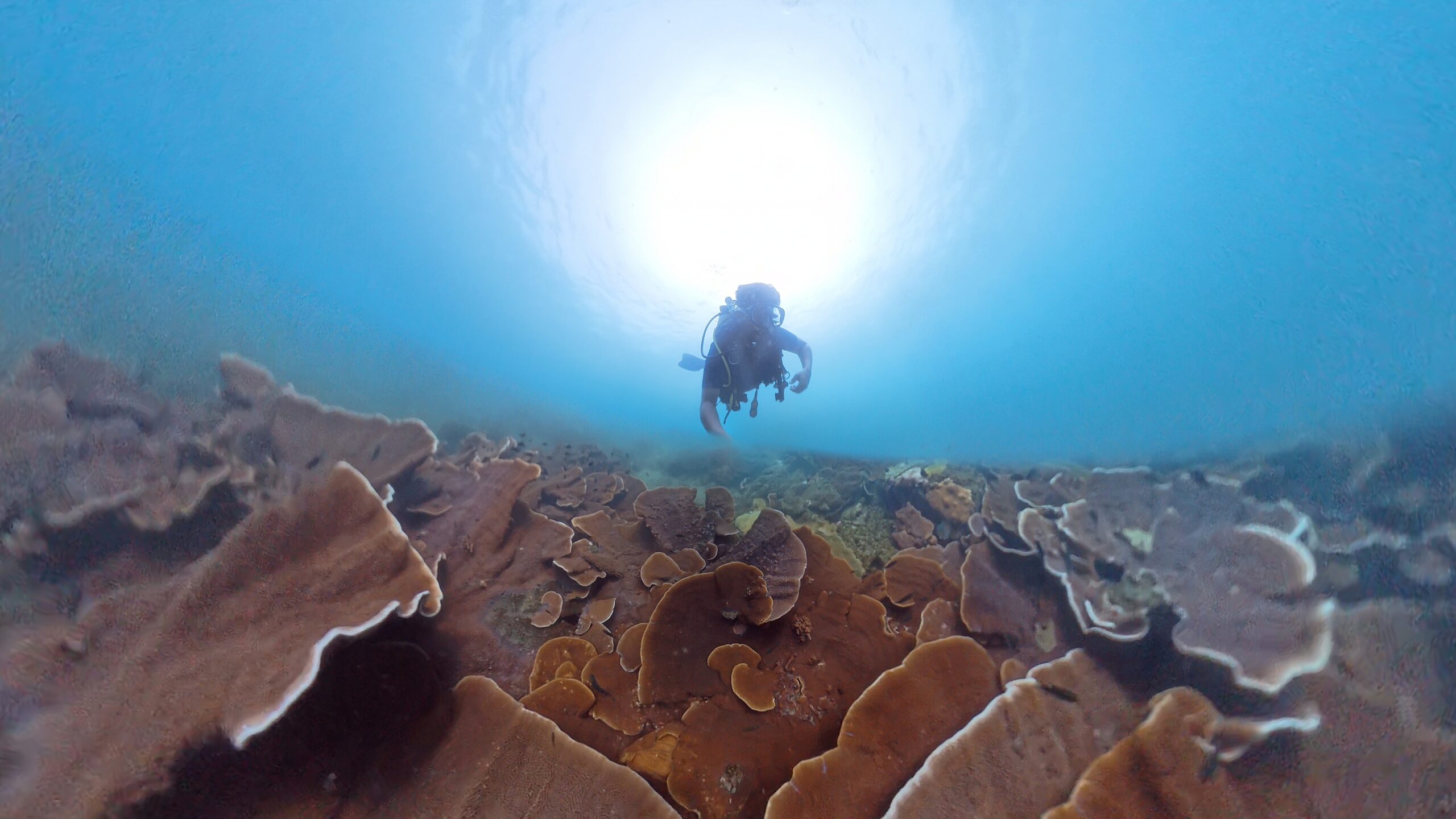
Grand Island is a larger area with approximately 10 to 12 dive sites.
Different locations offer different underwater terrain.
You can encounter:
- Coral
- Rock formations
- Different underwater landscapes
- Tropical fish
- Moray eels
- Groupers
- Nudibranchs
- Parrotfish
- Blue triggerfish
- Blennies
- Spiny coral
- Plate coral
- Other marine life found in the Konkan waters
The depth for beginner dives is generally around 8 to 12 metres.
The dive location is selected according to conditions such as tide and sea conditions.
The boat journey from the boarding beach to Grand Island is approximately 15 to 20 minutes.
Most importantly, there is far less crowding at the dive sites.

What about underwater visibility?
Visibility is one of those things you should never treat as a guarantee.
Conditions change from day to day.
As a rough comparison based on the locations we are discussing, Bat Island might have around 3 metres of visibility in some conditions, while Grand Island can offer around 5 to 6 metres or more depending on the location and day.
Those numbers should not be treated as promises.
Weather, tides, water movement and other conditions can change what you see underwater.
A good dive operator should tell you what conditions are actually like rather than promising a perfect underwater world every time.
What marine life can you see?
Grand Island's underwater environment can include a variety of marine life.
Depending on the site and conditions, you may encounter:
- Groupers
- Nudibranchs
- Parrotfish
- Blue triggerfish
- Blennies
- Moray eels
- Tropical reef fish
- Spiny coral
- Plate coral
- Rock formations and other underwater habitats
There is one important rule with wildlife experiences:
The ocean doesn't work like a zoo.
What you see depends on the site, season, visibility, conditions and what happens to be around when you dive.
That is part of what makes diving exciting.

What equipment do you get?
This is another area where the price difference starts to make sense.
The professional experience provides:
- Wetsuit
- Mask
- Powered-lens mask where required
- Individually fitted BCD
- Size-appropriate fins
- Weights based on the diver
- Scuba tanks
- Other required diving equipment
The equipment is cleaned, hygienic and maintained.
The air supplied in the tanks is filtered.
The equipment follows a maintenance cycle because scuba equipment is not simply recreational equipment. Much of it forms part of the diver's life-support system.

How crowded is the professional dive boat?
The boat used for the professional experience has a capacity of around 18 to 20 people, but the operation takes a maximum of 10 guests at a time.
The boat is designed for diving rather than being a large water-sports platform carrying several dozen customers through different activities.
There is shade on board.
Life jackets are provided.
A first-aid kit is available.
That smaller group size also means the experience is much more focused on the divers rather than managing a large crowd of people waiting for different activities.
What does the instructor actually do during the dive?
This is one of the most important differences.

With a beginner, the instructor stays with the diver throughout the dive and holds onto the diver's tank while guiding them through the experience.
The beginner isn't expected to manage the dive independently.
For certified fun divers, the divemaster leads the group and the certified divers follow.
The difference is based on experience and buoyancy control.
You are not simply being sent underwater and left to figure it out.
What happens if the weather changes?
Weather and sea conditions are part of diving.
If conditions create a safety problem and the trip cannot be conducted safely, the operation is called off.
The customer can reschedule for the following day or another suitable date.
If the customer isn't available on another date, they receive a refund.
There is another important distinction.
Poor weather doesn't necessarily mean the dive is cancelled.
Sometimes the sea remains safe for diving but visibility is reduced.
In that situation, the dive may still proceed and the divers experience whatever conditions are actually present.
That is part of diving.
What happens if you cannot complete the dive?
There are different reasons this might happen.
If you cannot equalise because of a physical issue such as blocked sinuses, the dive should be stopped rather than forcing you deeper.
If weather makes the dive unsafe, the trip can be rescheduled or refunded as described above.
If the diver is simply too frightened to continue after the training and the operation has already incurred the day's costs, the professional operator does not offer a refund for that situation.
This is why the pool training matters.
It gives you an opportunity to discover how comfortable you are with the equipment and basic skills before committing to the open-water dive.
What about underwater photography?
Underwater photography is included in the professional experience.
The instructor or divemaster uses an action camera during the dive to capture participants underwater.
There is no additional photography charge.
On average, guests receive around 20 clips, made up of photographs and short videos.
But there is an important difference in how the photography is approached.
The professional operation does not put bait or feed into the water to attract fish for photographs.
You get what is naturally there.
If a fish swims past, you see it.
If it doesn't, you don't.
That may sound less exciting than manufacturing the perfect photograph, but it is a much more responsible way to experience marine life.
What does professional scuba diving in Goa cost?
The current consumer price for the professional experience we are discussing is:
For a beginner, that includes:
- Approximately one hour of pool training
- One open-water dive
- Professional instructor
- Boat
- Fuel
- Equipment rental
- Tanks and filtered air
- Equipment preparation and maintenance
- Refreshments
- Drinking water
- Juices
- Snacks
- Underwater photography
- Life jacket
- Required staff
For a certified fun diver, the same price provides:
- Two tanks
- Two dives
- Professional divemaster
- Boat
- Equipment
- Fuel
- Refreshments
- Photography
- Safety equipment
- Required staff
The difference becomes much easier to understand when you stop comparing the headline prices and start comparing what is actually being delivered.
₹2,000 vs ₹7,000: what are you actually comparing?
| Mass-market Scuba + Water Sports Combo | Professional Scuba Experience | |
|---|---|---|
| Typical advertised price | Around ₹1,500–₹2,500 | ₹7,000 including GST |
| Day duration | Approximately 8 AM to 4–4:30 PM | Approximately 7 AM to 1 PM |
| Actual scuba time | Around 5–10 minutes | Approximately 40–75+ minutes depending on air consumption |
| Pool training | No | Approximately 1 hour |
| Beginner supervision | Limited | 1 instructor per beginner |
| Certified diver supervision | Large group environment | 1 divemaster for up to 3 fun divers |
| Group environment | Around 30–35 people on the boat | Maximum 10 guests |
| Dive location | Commonly Bat Island | Grand Island through certified operators |
| Dive depth | Very shallow, around 1–2 metres in the described experience | Around 8–12 metres for beginners |
| Visibility | Often poorer | Generally better, depending on conditions |
| Dive sites | More limited/shallow commercial site | Multiple sites around Grand Island |
| Equipment | Package-dependent | Individually fitted and maintained equipment |
| Photography | Basic photography, upgrades may be offered | Included |
| Marine-life baiting | May be used in the mass-market model described | No bait or feed |
| Water sports | Included | Not part of the scuba experience |
| Waiting | Significant | Experience is focused on diving |
| Weather cancellation | Package-dependent | Reschedule or refund if safety requires cancellation |
Why does professional scuba diving cost more?
You are paying for much more than the few minutes you spend underwater.
You are paying for trained and certified diving professionals.
You are paying for equipment that has been properly fitted, cleaned and maintained.
You are paying for tanks and properly prepared air.
You are paying for a dedicated boat operation, fuel and crew.
You are paying for pool training before the dive.
You are paying for a much smaller group.
You are paying for an instructor who can spend meaningful time with you.
You are paying for access to a different dive environment.
You are paying for operational planning.
You are paying for safety equipment and the staff required to operate the experience.
And you are paying for the fact that the operation can say no when conditions aren't safe.
That last point matters.
A responsible operator has to be willing to lose the day's revenue rather than take people to sea when conditions are unsafe.
Why does the cheap package look like such good value?
The appeal is understandable.
You see a list of ten things and a price of ₹2,000.
It feels like you are getting extraordinary value.
But ask yourself how much time you actually want to spend doing each activity.
If you spend eight hours on a trip but only around ten minutes actually diving, then you haven't really bought eight hours of scuba diving.
You've bought a full-day multi-activity excursion that happens to contain a short underwater component.
There is nothing wrong with understanding it that way.
The problem comes when someone books it expecting to experience scuba diving and returns home thinking:
It may not have been scuba diving as you imagined it.
It may simply have been a very different product.
Which scuba diving experience should you choose?
This is ultimately your decision.
If your priority is:
- Keeping the cost low
- Doing many different activities in one day
- Getting a taste of being underwater
- Taking some photographs
- Trying several water sports
Then a budget combination package may fit what you are looking for.
But if your priority is:
- Actually learning how to dive
- Having proper pool training
- Spending meaningful time underwater
- Exploring marine life
- Diving at a better dive location
- Having a professional instructor with you
- Using properly maintained equipment
- Avoiding large crowds
- Having a more relaxed and organised experience
- Having your dive logged digitally
- Taking home an experience you are likely to remember
Then you should look at a professionally operated dive.
The difference in price is substantial.
So is the difference in the experience.
Can your dive be logged?
Yes.
A beginner dive can also be logged digitally through the SSI system.
For someone who discovers that they genuinely enjoy diving, this can be the beginning of a much longer journey rather than simply another activity ticked off during a Goa holiday.
If you decide you want to become a certified diver, the next step is a proper certification course rather than simply repeating introductory dives.
What should you do before your dive?
A few simple things can make the experience much better.
Bring:
- Swimwear
- A change of clothes
- Towel
- Sunscreen
- Hat
- Sunglasses if required
Avoid carrying unnecessary luggage onto the boat.
Don't arrive hungover
Alcohol or intoxication before diving is not appropriate.
You need to be alert, comfortable and able to follow instructions.
Complete the medical questionnaire honestly
The dive centre uses this to determine whether you meet the necessary health requirements.
If you have recent surgery, sinus problems, a cold, vertigo or another medical concern, disclose it.
Don't hide a health problem simply because you don't want to miss the activity.
Plan your flight carefully
Do not schedule your flight immediately after diving.
Follow the surface-interval guidance provided by your dive professional and plan conservatively when combining diving with air travel.
For this experience, plan to have at least a full day between your dive and your flight rather than trying to squeeze a dive into your departure day.
What if someone comes with me but doesn't want to dive?
A non-diver can accompany the group on the boat for a reduced fee.
They can enjoy the boat trip, refreshments and snacks, and can swim or snorkel.
They cannot participate in the scuba dive.
The group returns to the beach at the end of the trip, generally around 1 PM.
There is no changing or shower facility at the beach itself. If you need a proper shower, you would need to return to the pool centre.
15 questions to ask before booking scuba diving in Goa
Before you pay for a dive, ask these questions:
- Is there pool or confined-water training before my first sea dive?
- How long will I actually be underwater?
- What depth will I realistically reach?
- How many divers will be with one instructor?
- Where exactly will I dive?
- What equipment is provided, and how is it maintained?
- What happens if I cannot equalise?
- What happens if I become frightened underwater?
- What happens if weather conditions make the dive unsafe?
- Is underwater photography included, and how is marine life treated during photography?
- Who is actually operating the dive?
- What certification and experience do the diving professionals have?
- Is the dive logged?
- What happens if I cannot complete the dive?
- What exactly am I paying for?
If an operator is uncomfortable answering these questions, that tells you something.
If they answer them clearly and transparently, you can make a much more informed decision.
The biggest question isn't "How cheap can I get scuba diving in Goa?"
It is:
"What kind of scuba diving experience do I actually want?"
If you simply want to say that you tried scuba diving in Goa and get a few underwater photographs, there are inexpensive packages available.
If you want to understand what scuba diving actually feels like, take the time to learn, descend to meaningful depth, explore an underwater environment, see marine life naturally and have a professional looking after you throughout the experience, then you are looking at a very different product.
At ₹7,000, the professional experience costs considerably more.
But you're not paying ₹7,000 simply to be underwater.
And most importantly, you're giving yourself the opportunity to experience scuba diving properly the first time.
Because the last thing we want is for someone to spend an entire day travelling and waiting, spend ten minutes underwater, and go home believing:
Our view at Top Goa Tours
We don't believe everyone needs to book the most expensive option.
Your budget is your decision.
But we do believe you should know what you are buying.
If your main objective is to experience scuba diving properly, we recommend choosing a professionally operated dive where training, safety, equipment, supervision and the actual underwater experience are treated as the priority.
That's why this is the type of scuba experience we are comfortable recommending.
If marine life and nature are what draw you to Goa in the first place, our Nature & Wildlife Experiences and Boat Experiences pages cover other ways to experience it, on the water and off it. And if you would rather have your whole trip planned around you, our Customized Tours page is a good place to start.
Experience The True Goa.
Ready to see it for yourself, or want help deciding what's right for you?
Explore Scuba Diving Talk to Top Goa ToursFrequently Asked Questions About Scuba Diving in Goa
How much does scuba diving cost in Goa?
Scuba diving prices in Goa vary significantly depending on what is included and how the experience is operated. Mass-market scuba and water-sports combination packages can be advertised around ₹1,500 to ₹2,500 per person, while the professional experience described in this guide costs ₹6,000 plus GST, or ₹7,000 per person. The two should not automatically be considered equivalent products.
Is ₹2,000 scuba diving in Goa worth it?
It depends on what you want. If you want to combine several inexpensive water activities into one day, a budget package may suit you. If your main objective is to actually experience scuba diving with proper training, meaningful underwater time and professional supervision, compare the inclusions and operating model carefully before choosing.
Is scuba diving in Goa safe?
Scuba diving involves inherent risks, which is why proper training, medical screening, equipment maintenance, qualified diving professionals and appropriate weather and sea-condition decisions are important. Always follow your dive professional's instructions and disclose relevant medical information.
Can non-swimmers do scuba diving in Goa?
For the beginner experience described in this guide, non-swimmers can participate, subject to the operator's requirements and medical screening.
What is the best place for scuba diving in Goa?
There are several dive locations in Goa, and conditions vary. The professional experience described here operates around Grand Island, where there are multiple dive sites and a range of underwater environments. The specific dive site is selected according to conditions.
How deep do beginners go scuba diving in Goa?
At the Grand Island sites discussed in this guide, beginner dives generally reach around 8 to 12 metres, depending on the dive site and conditions.
How long does a scuba dive last in Goa?
A "45-minute dive" is an approximate duration rather than a guarantee. Actual underwater time depends on factors such as air consumption, depth, conditions and the diver's experience.
Do you get underwater photos with scuba diving in Goa?
It depends on the operator. The professional experience described here includes underwater photography at no additional charge, with approximately 20 photographs and video clips on average.
Can children do scuba diving in Goa?
The beginner experience described here accepts participants from age 10, subject to the operator's requirements and medical screening. Parents should always check the specific requirements before booking.
Can I fly after scuba diving?
You should not plan to fly immediately after diving. Follow the surface-interval guidance provided by your dive professional and plan conservatively when combining diving with air travel.
What happens if the weather is bad?
If sea conditions make the dive unsafe, the professional operation cancels or reschedules the trip. If the customer cannot attend on another suitable date, a refund is provided according to the stated cancellation policy.
Do I need to know how to equalise before scuba diving?
No. Equalisation is taught during the beginner pool training. However, if you are unable to equalise properly during training or the dive, you should not continue descending.
A note before you book
Scuba diving is a specialised activity with specific training, medical and operational requirements.
The information above describes the professional experience discussed in this guide and is intended to help travellers ask better questions before booking.
Conditions, requirements, dive sites and operating procedures can change.
Always follow the instructions of the dive professional and disclose relevant medical information honestly.