

Before You Come to Goa
Goa is easy to visit. Experiencing it well is a different story.
Goa is often reduced to beaches, parties and a few familiar sightseeing spots.
There is a lot more to the state than that.
There are forests and rivers, old villages, Portuguese-era neighbourhoods, temples and churches, mangroves and islands, local food and feni, fishermen and farmers, wildlife and stories that have been passed down through generations.
The challenge isn't finding things to do in Goa. It is knowing what is actually worth doing, when to do it, where to stay, how much time to allow and who you can trust to deliver what they promise.
So before you come to Goa, take a little time to understand the place.
First, decide what kind of Goa you want to experience
There isn't one perfect Goa itinerary.
A couple looking for quiet beaches, good food and slow mornings will want a very different trip from a family that wants to explore, or a group of friends looking for nightlife and adventure.
Before booking your hotel or filling every day of your itinerary, think about what you actually want from the trip.
Do you want to relax? Explore? Eat? Learn? Spend time in nature? Try adventure activities? Go out at night? Or experience a bit of everything?
Your answer should influence where you stay, how many days you spend in Goa and what you put into your itinerary.
This is one of the biggest differences between simply visiting Goa and actually experiencing it.
Goa is more than its beaches
Beaches are an important part of Goa, but they are only one layer of the destination.
You can explore Portuguese-era architecture and heritage, ancient temples and churches, forts and ruins, traditional Goan homes, mangroves and backwaters, forests and waterfalls, islands and villages, birdlife and wildlife, dolphins and marine life, scuba diving and snorkelling, boat and yacht experiences, traditional Goan food, local markets, village life, cashew and palm feni, and the stories, traditions and festivals that shape everyday life here.
Some of the most memorable experiences can happen far away from the beach. A guided heritage walk can reveal stories you would never notice simply by looking at a monument. A boat ride through mangroves can introduce you to an entirely different ecosystem. A meal prepared with local families can tell you more about Goan culture than a restaurant ever could.
This is the Goa we believe is worth discovering.

When is the best time to visit Goa?
October to February is generally the most comfortable period for exploring Goa.
The weather is usually more pleasant, making it a good time for sightseeing, heritage walks, outdoor experiences and exploring different parts of the state.
There is something first-time visitors should know, though. Even during the most comfortable season, roughly 10:30 or 11 AM to 3:30 or 4 PM can feel hot and humid.
When we plan outdoor experiences, we try not to leave guests exposed to the heat for long periods in the middle of the day.
What about the monsoon?
June to September can be a wonderful time to visit Goa if you enjoy nature. The landscape changes dramatically. Forests become lush, waterfalls and streams come alive, and Goa takes on a completely different character.
The monsoon can be a particularly good time for waterfall experiences, forest walks, night nature experiences, river and backwater experiences, riverside activities and exploring Goa's greener side.
Many sea-based activities operate seasonally and are not available during the monsoon. That doesn't mean you should avoid Goa during the rains. If you enjoy nature and don't mind occasional rain, you may discover a side of Goa that many visitors never see.

How many days do you need in Goa?
For a first trip, 3 nights and 4 days is a good starting point. That gives you enough time to experience some of Goa's major highlights without spending the entire holiday travelling between places.
If you want to explore Goa more deeply, a week is much better.
One of the most common mistakes we see is trying to see everything in a short trip. Goa may look small on a map, but travelling between different parts of the state can take significant time, particularly during busy periods.
Instead of asking how many places you can fit into one day, think about how you can experience each place properly. A slower itinerary with fewer, better chosen experiences will usually leave you with better memories than a packed schedule spent sitting in traffic.
North Goa or South Goa?
Which part of Goa should you stay in?
There is no universal answer. For many first-time visitors, we generally think about the two regions like this.
North Goa
North Goa is particularly useful if you want to explore different places, experience heritage, visit markets, try activities and have more options for things to do.
South Goa
South Goa is often better suited to visitors who want quieter surroundings, beautiful beaches, relaxation and a slower holiday.
Neither is inherently better. The important thing is to understand what you want from your trip before choosing where to stay.
Why geography matters
Staying in South Goa while planning most of your activities in North Goa, or the other way around, can mean spending a surprising amount of your holiday travelling.
If you want to experience both sides properly, around five days or more gives you more flexibility. One approach is to spend roughly two days exploring one region, two days in the other, and allow some time for travelling between them.

Where should you stay in Goa?
Don't choose your hotel first and then try to build your entire trip around it.
A better approach is to decide what you want to experience, understand where those experiences are, choose your area and then select your accommodation.
Your ideal location depends on what matters to you. Do you want beaches, nightlife, heritage, nature, restaurants, quiet surroundings, easy access to activities, a luxury resort or a central location for exploring?
How do you get around Goa?
Your choice of transport can make a big difference to your trip.
Scooter
A scooter can be the most convenient option if you are comfortable riding, want independence and don't want to worry too much about parking. It is particularly useful for couples or solo travellers who want to explore at their own pace. Make sure you use a properly registered commercial rental vehicle and ride responsibly.
Taxi
Taxis are particularly convenient for families and visitors who want someone else to handle the driving, parking and navigation. For a group, the convenience can easily outweigh the additional cost.
Self drive
A self drive car can work well for families or groups who want independence. The downside is that getting lost, navigating unfamiliar roads or losing mobile connectivity in less populated areas can consume valuable holiday time.
App based taxis
App based taxis can be useful around popular tourist areas, but don't assume they will always be readily available everywhere in Goa. Cancellations and limited availability can become an issue in less crowded areas.
Public transport
Public transport can be an option for travellers on a very tight budget, but it isn't something we would recommend building your entire Goa itinerary around if convenience and time matter to you.

Which beaches are best in Goa?
There is no single best beach in Goa. The right beach depends on what you want from it.
If you want to swim
Look for beaches with active lifeguards and some level of activity around you. In North Goa, options include Baga, Calangute, Candolim, Sinquerim, Anjuna and Vagator. In South Goa, options include Colva, Palolem, Agonda, Benaulim, Mobor and Cavelossim. Always pay attention to local conditions and lifeguard instructions.
If you want a quieter beach
You could consider places such as Keri, Vanguinim, Butterfly Beach, Polem, Fatrade and Velsao. Remember that quiet doesn't automatically mean safer for swimming. A deserted beach may have no lifeguard, stronger currents or conditions that make swimming unsafe.
If you want beach shacks, food and atmosphere
Baga, Candolim, Calangute, Sinquerim, Dona Paula, Benaulim, Colva, Cavelossim, Agonda, Palolem and Anjuna all offer different versions of the beach and food experience. Vagator also has restaurants and venues with elevated views around the cliffs.
Don't choose a beach simply because someone called it the best beach in Goa. Choose it because it is the right beach for you.

What should you eat and drink in Goa?
Food is one of the best ways to understand Goa. You don't need to spend every meal in a famous restaurant to experience it.
Local food worth trying
Some things worth looking out for include ros omelette, cutlet pav, steak bread, chorizo pav, samosas, vada pav, mirchi pav, kappa and other local snacks.
And then there is feni. Goa's traditional local spirit is made from cashew or coconut, and there are different ways to experience it. You may also come across infused feni and other locally produced drinks.
Don't choose restaurants simply because they are popular
The right restaurant depends on what you enjoy. Do you want traditional Goan food, seafood, vegetarian food, fine dining, a local family run place, a beach shack, a lively atmosphere, a quiet dinner or something casual?
A restaurant that is perfect for one traveller can be completely wrong for another.

What can you experience in Goa beyond the beaches?
This is where Goa gets interesting.
Nature and wildlife
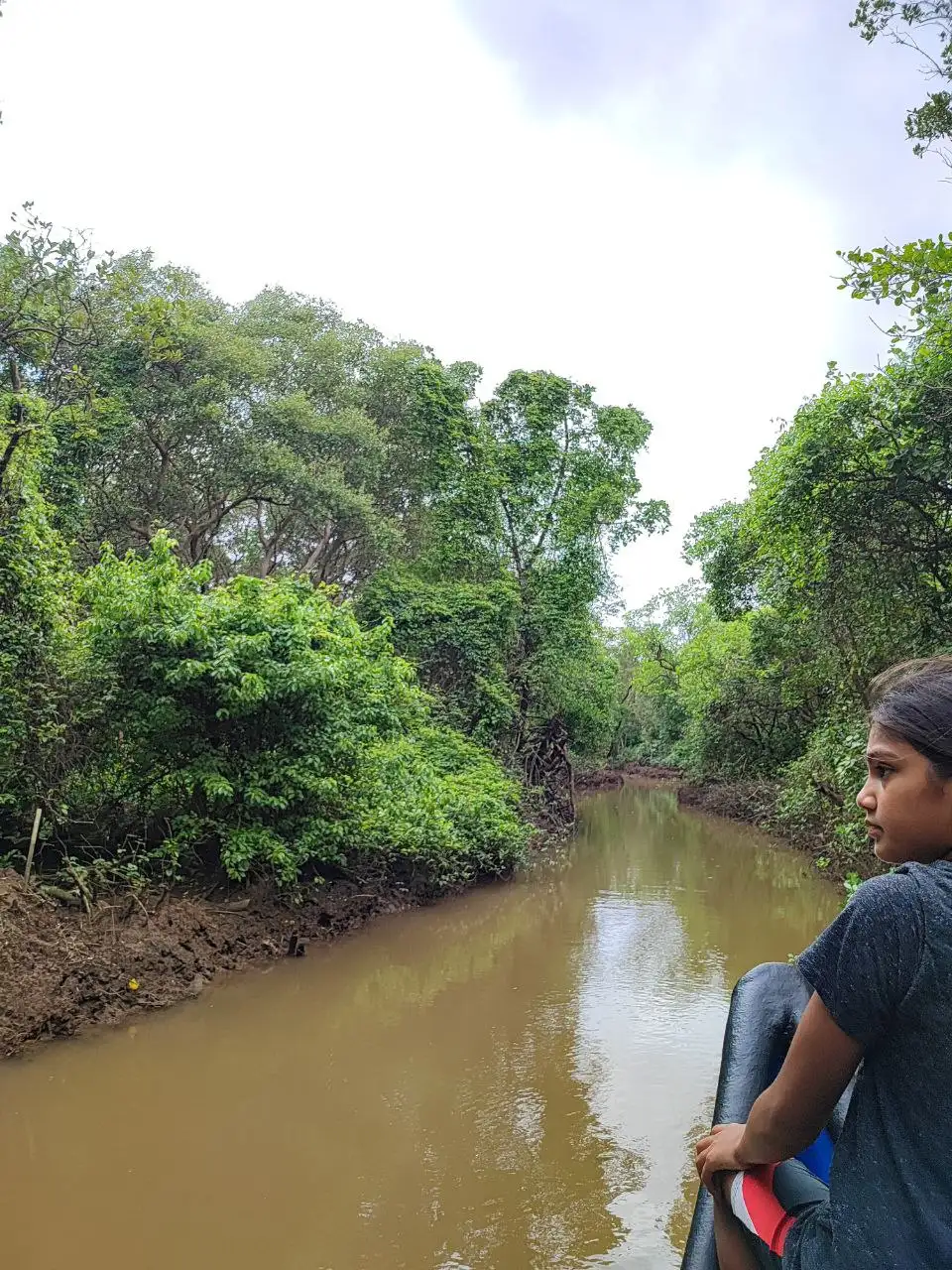
Goa has a remarkable variety of natural environments packed into a relatively small state. You can find forests, rivers, mangroves, backwaters, islands, wetlands, beaches and coastal ecosystems, marine environments, birds, butterflies, reptiles, crabs, otters, dolphins, crocodiles and other small and often overlooked forms of wildlife.
Experiences such as mangrove birding, dolphin discovery, marine walks and forest experiences can reveal a completely different side of Goa.
Wildlife is wild, though. Sightings can never be guaranteed. If you see something, enjoy the moment. Don't chase it, feed it or disturb it simply to get a photograph.
Heritage and culture in Goa
Goa's history is much deeper than its Portuguese period. The region had established communities, traditions, religious practices and knowledge systems long before Portuguese arrival.
The Portuguese period then added another significant layer to Goa's history, influencing architecture, food, trade, governance, religion and everyday life. The interactions and changes from this period continue to shape Goa today.
You can see these layers in Old Goa, churches, temples, forts, Portuguese houses, traditional villages, caves and ruins, food, festivals, religious traditions and everyday cultural practices.
Simply visiting a monument doesn't necessarily tell you its story. This is where a good storyteller can completely change the experience. A guided heritage experience can connect architecture to people, politics, religion, trade, food and everyday life. You begin to understand not just what you are looking at, but why it matters.

What about Goa's nightlife?
If you enjoy nightlife, Goa has plenty to offer. But don't choose a venue simply because it is famous. Think about the atmosphere you want first.
You can find Bollywood nights, live performances, intimate restaurant gigs, house music, larger parties, clubs and more relaxed evening venues.
Entry prices can vary significantly depending on popularity, demand, events and season. Some popular venues can become expensive.
Choose the kind of night you want first, then decide where to go.
We don't consider ourselves nightlife specialists, but if you're looking for recommendations, you can always ask us.
How do you choose the right Goa experience?
This is one area where visitors need to be particularly careful. Goa has an enormous number of activities and operators, and the cheapest option isn't necessarily the best value.
Before booking, ask: who is operating it? What exactly is included? What equipment is provided? What safety standards are followed? How long does the experience actually last? Is a guide or naturalist included? What happens if weather conditions change? Is the operator easy to contact? Are the photographs representative of what you will actually experience? Do the reviews, website and social media presence tell a consistent story?
For scuba diving and snorkelling in particular, don't choose purely on price. The same applies to dolphin trips. Some inexpensive dolphin trips are essentially short boat rides where you get a limited amount of time to look for dolphins. A dolphin sighting is never guaranteed.
How can you tell if a Goa operator is trustworthy?
Before booking an activity, look at three things: their website, does it clearly explain what they offer? Their Google presence and reviews, do real customers appear to have experienced what is being advertised? Their active social media, does their recent activity match what they claim to offer?
When these three things tell a consistent story, you have a much better basis for making a decision.
And remember, a discount is not the same thing as value. Sometimes paying slightly more for proper equipment, good communication, safety, experienced people and reliable delivery can save you from spending the rest of your holiday trying to fix a bad experience.
Common mistakes first time visitors make in Goa
Trying to see everything
Goa rewards curiosity, but not rushing.
Choosing a hotel before deciding what you want to do
Your accommodation can determine how much time you spend travelling.
Planning every day around Instagram
Photographs don't tell you about seasonality, crowds, weather, access or what the experience actually feels like.
Ignoring the season
A beautiful experience in December may not operate in July.
Booking purely on price
The cheapest option may not deliver the experience you thought you were buying.
Booking with random people on the road
If you cannot establish who is actually responsible for delivering the experience, think twice.
Sleeping through the best part of the day
Some experiences are best early in the morning, while others are better later in the afternoon or evening.
Trying to cover North and South Goa every day
You'll spend more time travelling than experiencing.
Assuming wildlife sightings are guaranteed
They're not.
Treating Goa like a tourist attraction rather than someone's home
This is perhaps the biggest mistake of all.
Goa travel safety: a few things to know
You don't need to be overly cautious to enjoy Goa. You simply need to use common sense.
In the sea
Swim where lifeguards are present and follow their instructions. Be particularly careful around unfamiliar currents and beaches where there is no lifeguard.
On a scooter
Ride according to the conditions, wear appropriate safety gear and don't drink and drive. Police checks can happen in popular areas.
On forest trails and treks
Don't head into unfamiliar forests, waterfalls or isolated trails alone. Mobile connectivity can disappear, routes can be confusing and you may unknowingly enter private or restricted areas. A local guide can make a major difference.
Around waterfalls and cliffs
Conditions can change quickly. Don't take unnecessary risks simply to get a photograph or attempt a jump.
On boats
Use trusted, properly operated boating providers and understand what is included before boarding.
Around wildlife
Keep your distance. Don't feed, chase, touch or deliberately disturb animals for photographs.
Responsible tourism in Goa
Goa is not a theme park. It is home to people who live, work, worship, farm and fish here. Its forests, rivers, beaches and villages are not simply backdrops for visitors.
When you travel through Goa, leave no trace and, wherever possible, leave a positive impact.
Take your waste with you
Don't litter beaches, viewpoints, waterfalls, forests or scenic locations. Avoid buying unnecessary single use packets, bottles and disposable items. Never throw anything from a vehicle. If you brought it with you, take it back with you.
Keep the noise down
Loud music, shouting and screaming might seem harmless on holiday, but villages and residential areas are people's homes. Be especially mindful at night. Even if you're standing on a public road, someone may be living a few metres away.
Respect wildlife
If you encounter birds or animals, give them space. Don't make loud noises to attract them. Don't chase them for photographs. Don't feed them. Your excitement shouldn't come at the expense of the animal or another person's experience.
Remember that you are a visitor
Give local residents priority and respect their right of way. You are visiting their home. Ask before photographing people. Don't enter private property unless you know you are welcome. Respect people's homes, privacy and daily routines.
Dress appropriately
Enjoy the beaches, but wear appropriate beachwear when swimming. When visiting temples, churches and other religious places, dress modestly. Avoid very short or revealing clothing and clothing carrying offensive or anti religious messages.
Respect photography rules
If photography isn't permitted, don't photograph. Don't enter restricted areas for a better picture. Not every moment needs to become content. The perfect photograph is never more important than someone's privacy, faith or property.
Leave Goa beautiful for the next person
Before you leave a place, ask yourself: is it as good, or better, than I found it?
So, how should you plan your Goa trip?
Don't start with a list of twenty attractions. Start with yourself.
Think about who you are travelling with. A couple, family, friends or solo?
Think about what you actually enjoy. Food, nature, heritage, beaches, adventure, nightlife, relaxation?
Think about when you're visiting. The season can completely change what is available.
Think about how much time you have. Three nights and four days? A week? Longer?
Think about where you will be staying. Choose your location around your plans, not the other way around.
And finally, think about what you want to remember when you go home.
If you don't know where to start
That's exactly where local knowledge can help.
At Top Goa Tours, we don't believe every visitor needs the same Goa itinerary. Our role is to help you make better decisions, whether that means recommending a trusted activity, selecting something from our Curated Collection, or building a customised itinerary around you.
Trusted Recommendations
Activities operated by partners we have vetted and are comfortable recommending.
Curated Collection
Experiences where we go beyond simply booking something. We shape the experience around the people, place, timing, storytelling, hospitality and details that matter.
Customised Tours
A Goa experience built around your interests, group, time and priorities.
Our job isn't to help you tick more boxes. It's to help you experience Goa well.
Ready to experience Goa beyond the usual?
Explore our Curated Collection, discover our Trusted Recommendations, or tell us what you're looking for and we'll help you plan it.
Experience The True Goa.