

The Complete Guide to Chorao Island, Goa
Discover One of Goa’s Most Peaceful and Authentic Islands
When most people think of Goa, they imagine beaches, beach shacks and nightlife. But just a short ferry ride from Panaji lies a completely different side of Goa, one where quiet village roads replace busy streets, mangrove forests replace crowded beaches, and every stop has a story waiting to be told.
Welcome to Chorao Island, one of Goa’s most fascinating yet least explored destinations.
Whether you’re a nature lover, a history enthusiast, a photographer, a birdwatcher, or simply someone looking to experience a quieter side of Goa, Chorao offers an unforgettable day away from the usual tourist trail.
This guide brings together everything you need to plan your visit, from ferry timings and the best places to visit, to local traditions, hidden experiences and practical travel tips. Whether you’re planning to explore on your own or with a local guide, this article will help you make the most of your time on the island.
Why Visit Chorao Island?
Chorao is not about checking attractions off a list.
It’s about slowing down.
The island rewards curious travellers who enjoy conversations with locals, peaceful walks through villages, exploring forgotten ruins, spotting wildlife in the mangroves and discovering stories that don’t appear on typical sightseeing itineraries.
Unlike many tourist destinations in Goa, Chorao still feels lived in rather than developed for tourism. You’ll find temples, churches, traditional farms, fishing communities and mangrove ecosystems existing side by side, offering a glimpse into a side of Goa that many visitors never experience.
If you’re looking for an offbeat experience that combines nature, culture and local life, Chorao Island deserves a place on your itinerary.
Is Chorao Island Worth Visiting?
Absolutely, especially if you enjoy authentic travel experiences.
Chorao is ideal for:
-
- Families looking for a relaxed day trip.
-
- Couples wanting to escape the crowds.
-
- Birdwatchers and nature enthusiasts.
-
- Travellers interested in local Goan culture.
-
- Photographers who enjoy peaceful landscapes.
-
- Visitors who have already explored Goa’s popular beaches and want to discover something different.
If your idea of travel is rushing between attractions, Chorao may feel slow. But if you enjoy discovering places through stories, conversations and nature, you’ll likely find it to be one of Goa’s most memorable destinations.
Where is Chorao Island?
Chorao Island is Goa’s largest river island, located along the Mandovi River, just a short distance from Panaji.
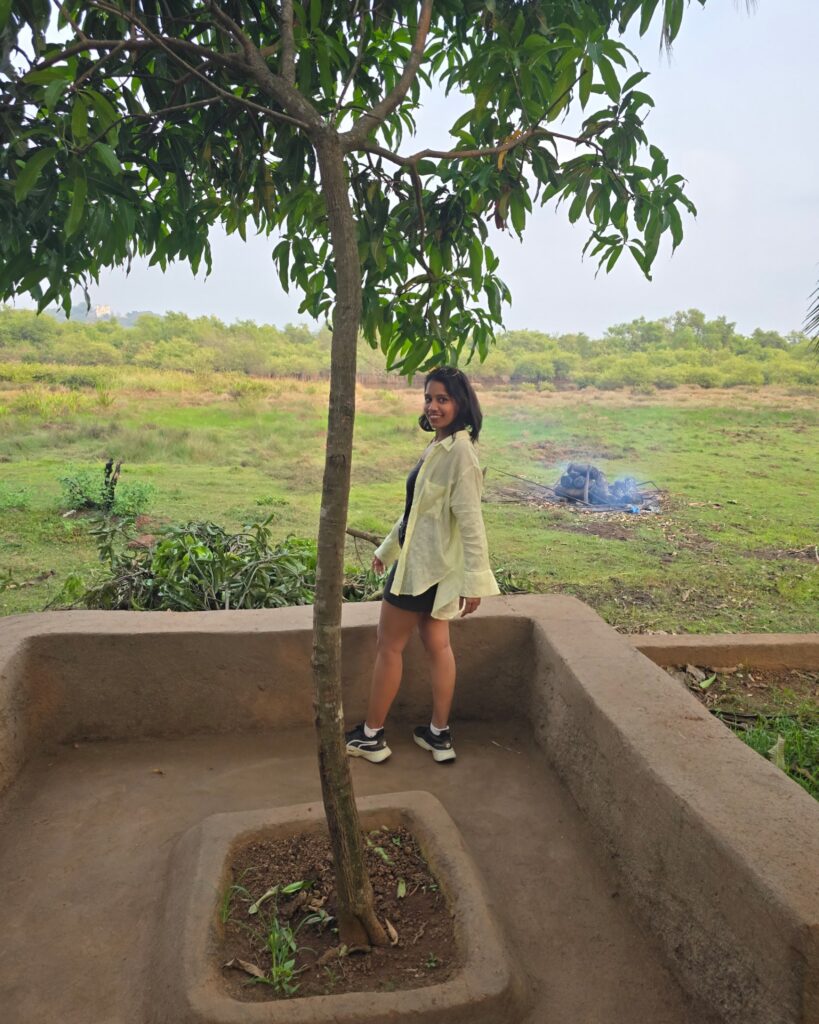
Although it is close to the capital city, the atmosphere changes almost immediately after crossing the river. The traffic fades away, village roads become quieter and the landscape transforms into a mix of coconut groves, mangroves, paddy fields and traditional settlements.
Historically, the island was known as Chudamani or Chodan, names that continue to be used by many locals today. According to local tradition, these names are linked to mythology surrounding Lord Krishna and his family.
During Portuguese rule, Chorao was known as the Island of Noblemen, as many wealthy Portuguese families once built their residences here. While much of that era has faded with time, remnants of its history can still be seen across the island.
How to Reach Chorao Island?
Reaching Chorao is part of the experience.
Via Ribandar Ferry
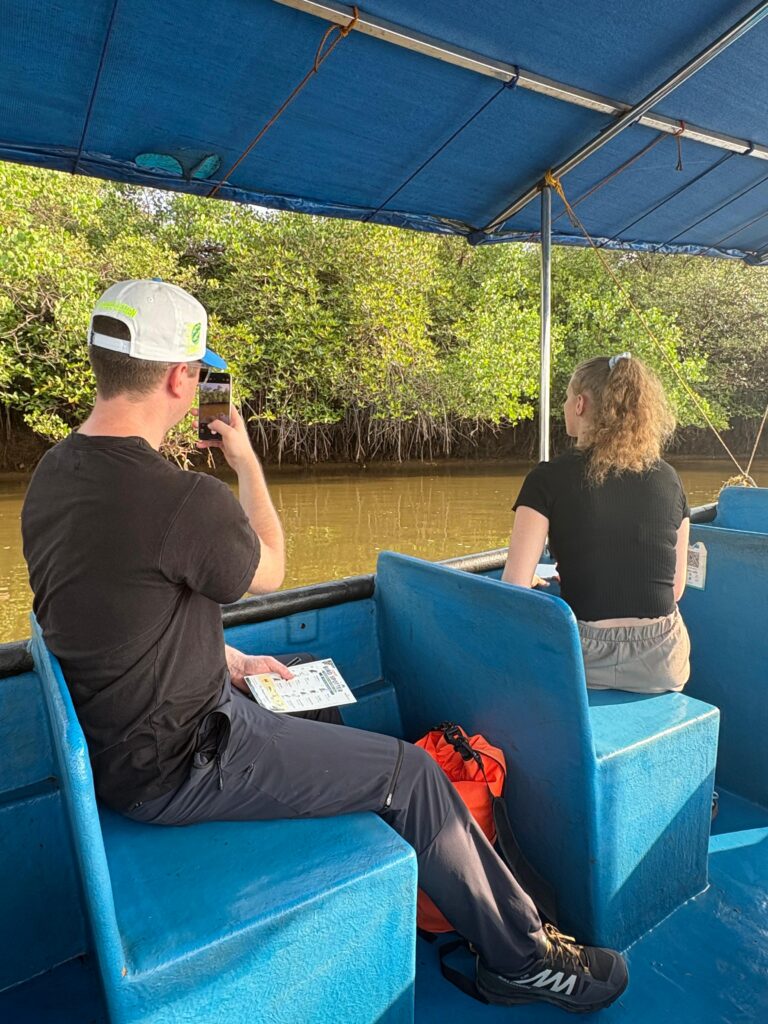
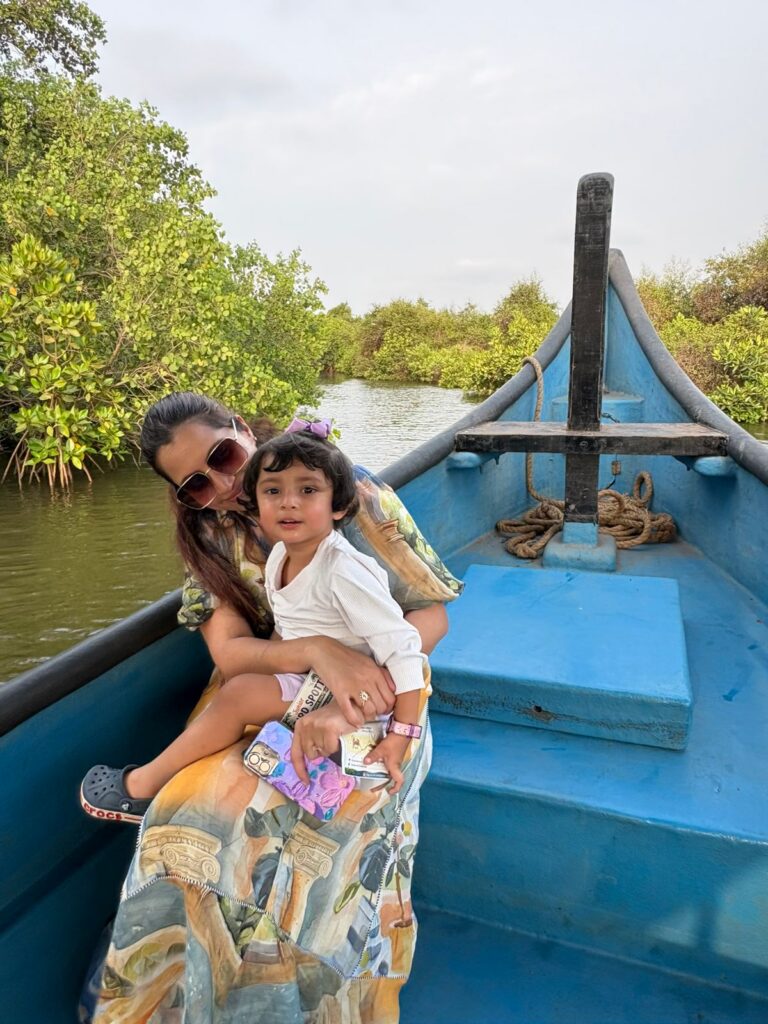

The most popular way to reach the island is by taking the government ferry from Ribandar, located just outside Panaji.
The ferry operates throughout the day, beginning around 6:00 AM and continuing until approximately midnight.
During regular hours, ferries generally operate every 10 to 15 minutes, while during peak hours the waiting time is often reduced to around 5 minutes.
The crossing itself takes roughly 15 minutes, making it an enjoyable start to your journey.
Both cars and motorcycles can be transported on the ferry. Vehicles are charged a nominal fee depending on their category, while passengers can board easily.
By Road
If you prefer not to take the ferry, Chorao can also be accessed by road through the Bicholim side or via Calvim Village. This route is especially useful during emergencies or if you’re travelling from North Goa.
Best Time to Visit Chorao Island
Although Chorao can be visited throughout the year, each season offers a different experience.
November to February
This is considered the best season for birdwatching, as migratory birds arrive at the Dr. Salim Ali Bird Sanctuary. The pleasant weather also makes walking and cycling more enjoyable.
Monsoon
The island becomes lush and incredibly scenic. The paddy fields turn green, the mangroves come alive and the countryside feels fresh and peaceful. If you enjoy nature, this is one of the most beautiful times to visit.
Summer
While afternoons can be warm, early mornings and evenings remain pleasant, especially if you’re planning a boat ride through the mangroves.
Things to Do in Chorao Island
Visit the Devaki Krishna Temple
One of the island’s most significant heritage sites is the Devaki Krishna Temple.
Unlike most temples dedicated solely to Lord Krishna, this temple honours both Krishna and his mother, Devaki, making it unique in Hindu tradition.
The original temple stood on Chorao Island before the Portuguese period. To protect the deity during religious persecution, it was relocated, eventually finding its present home in Marcel. The temple on Chorao remains deeply connected to this history and continues to be an important part of the island’s cultural identity.
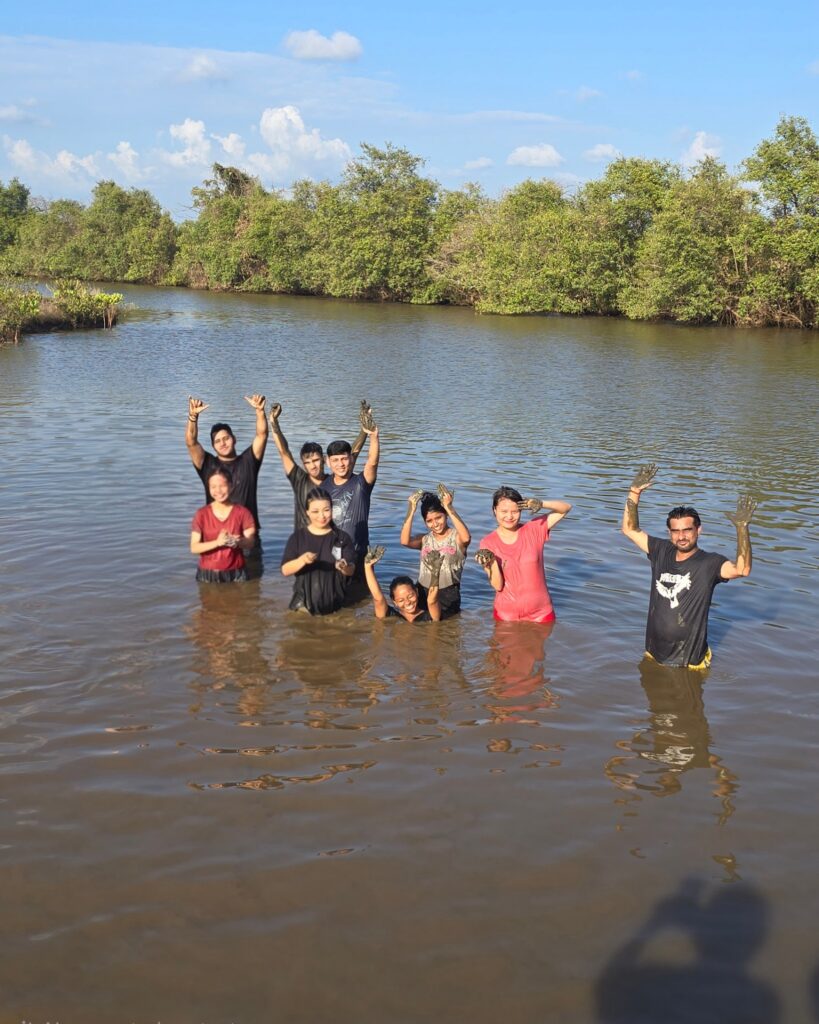
The annual Chikol Kalo festival is one of the most fascinating traditions associated with this heritage. Often compared to India’s version of a mud festival, participants cover themselves in mud and oil while celebrating through playful games and rituals that reflect community spirit and tradition.
Time Required: 20 to 30 minutes
Good For: Heritage lovers, families and anyone interested in Goa’s living traditions.
Hike to the Ruins of St. Jerome’s Seminary
One of Chorao’s most overlooked landmarks sits quietly on a hill overlooking the island.
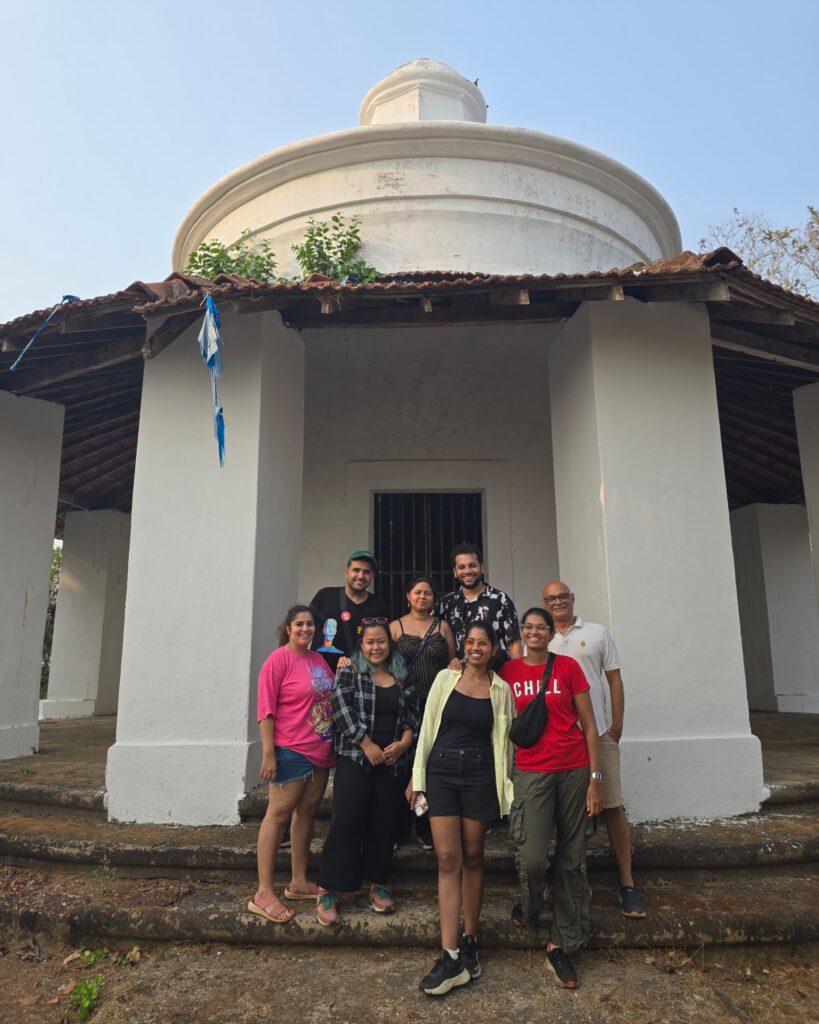
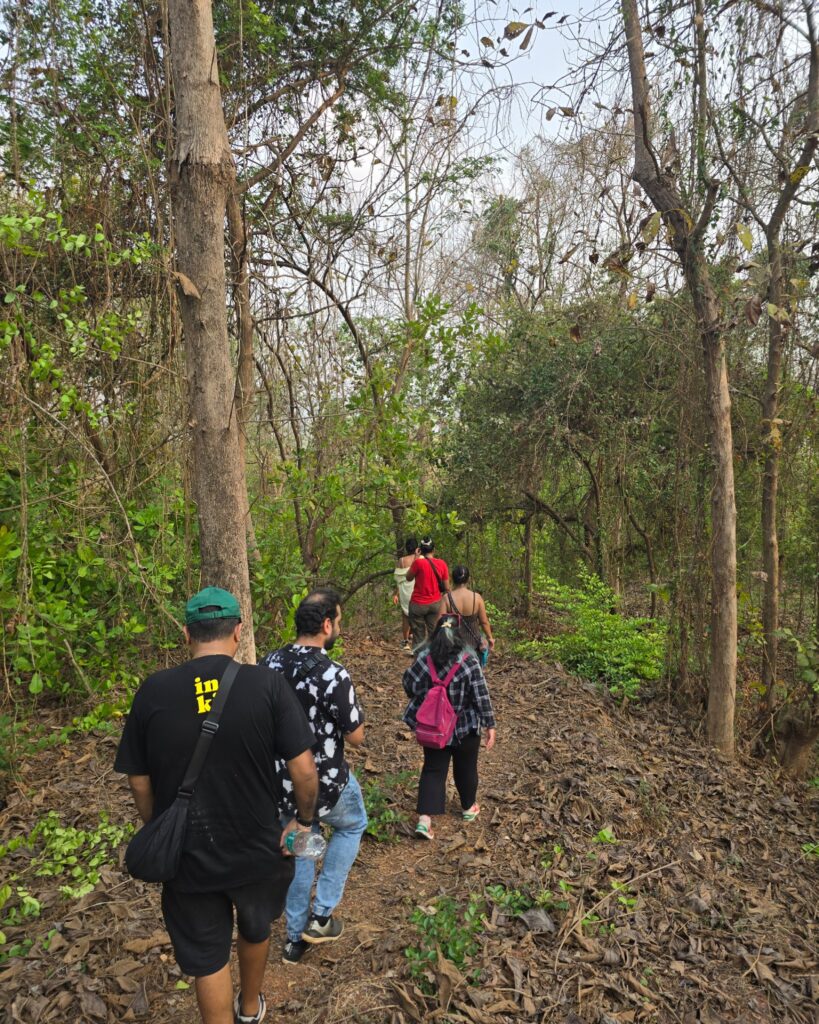
A short uphill walk of around 20 to 30 minutes leads to the ruins of what was once one of the region’s important seminaries, now commonly referred to as St. Jerome’s Chapel.
The walk itself is part of the experience.
As you climb, the modern world slowly disappears and you’re surrounded by trees, birds and the peaceful atmosphere that defines Chorao.
The remaining structure offers a glimpse into the island’s Portuguese past and reminds visitors why Chorao was once known as the Island of Noblemen.
This stop is recommended for visitors who are reasonably comfortable walking on uneven terrain.
Time Required: Around 45 minutes including the hike.
Good For: History enthusiasts, walkers and travellers looking to explore beyond the obvious.
Explore a Traditional Kulagar
A visit to a traditional Kulagar is one of the best ways to understand rural Goan life.
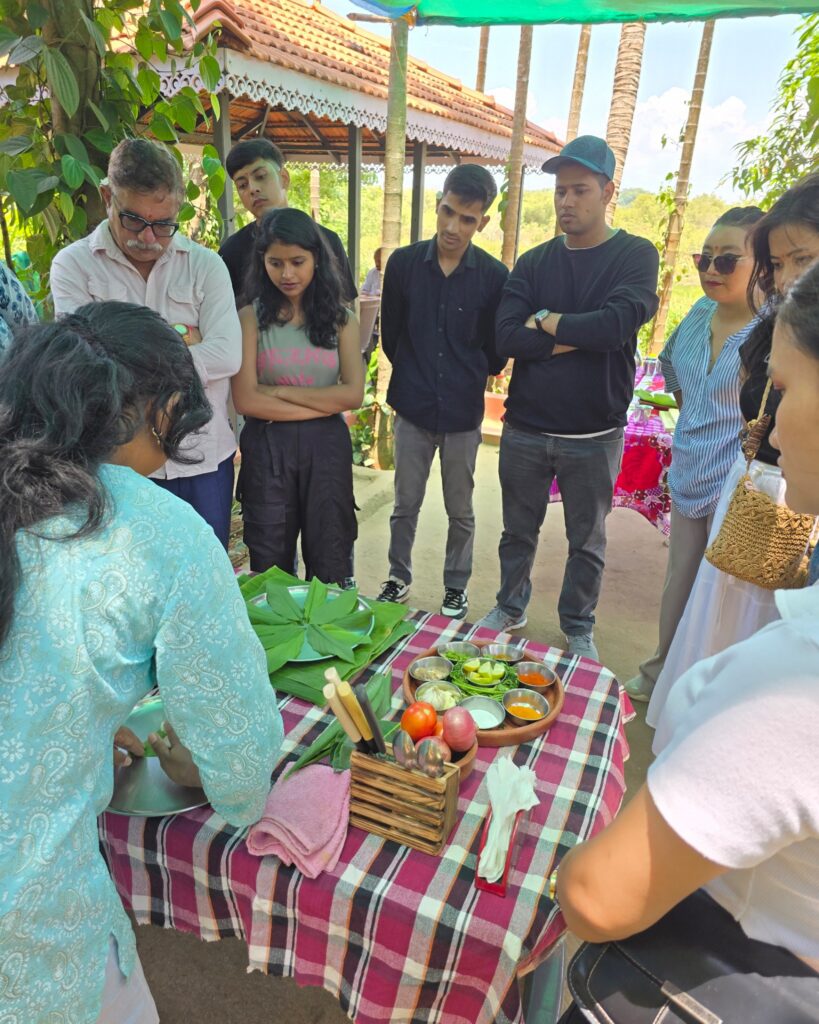
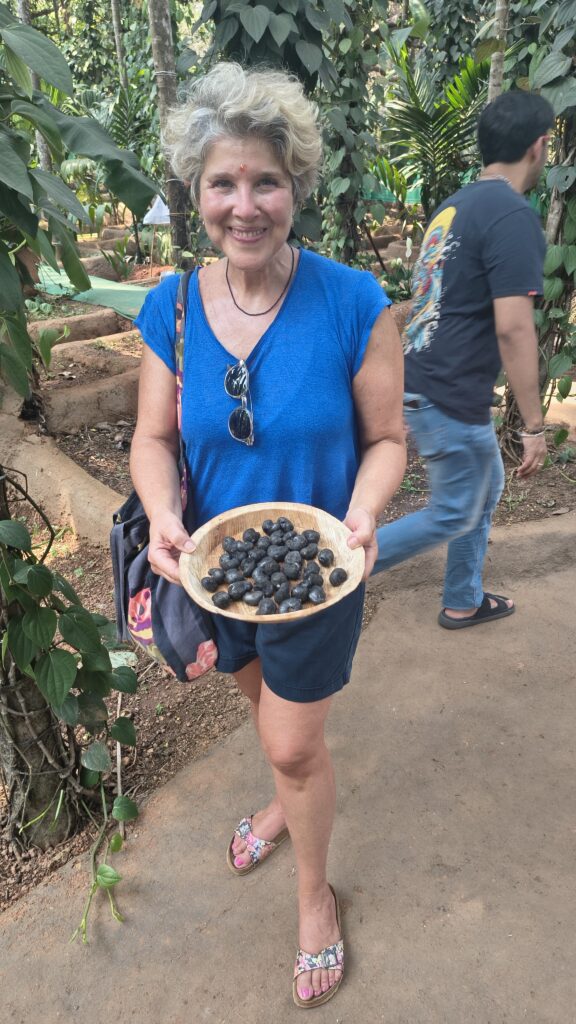
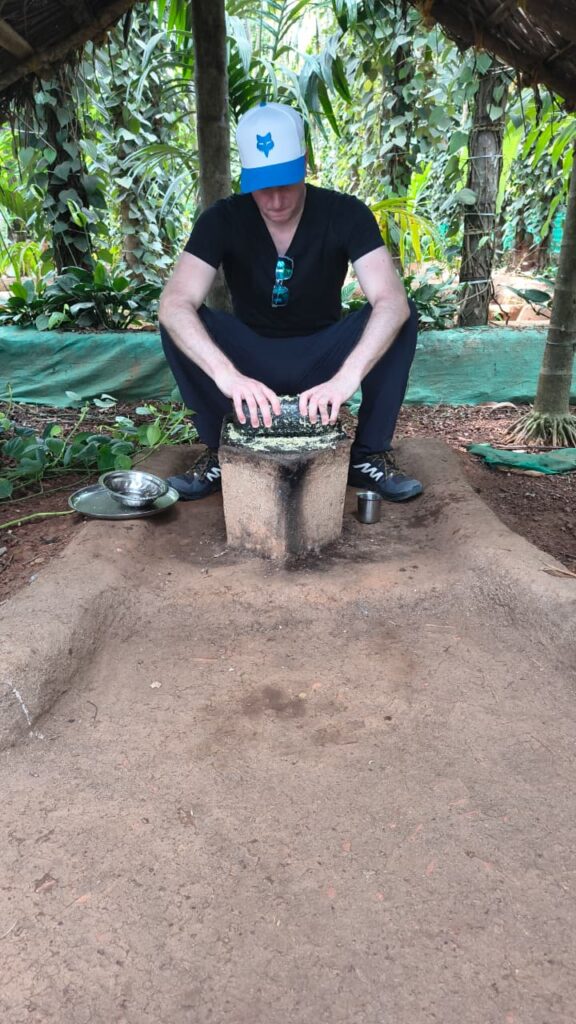
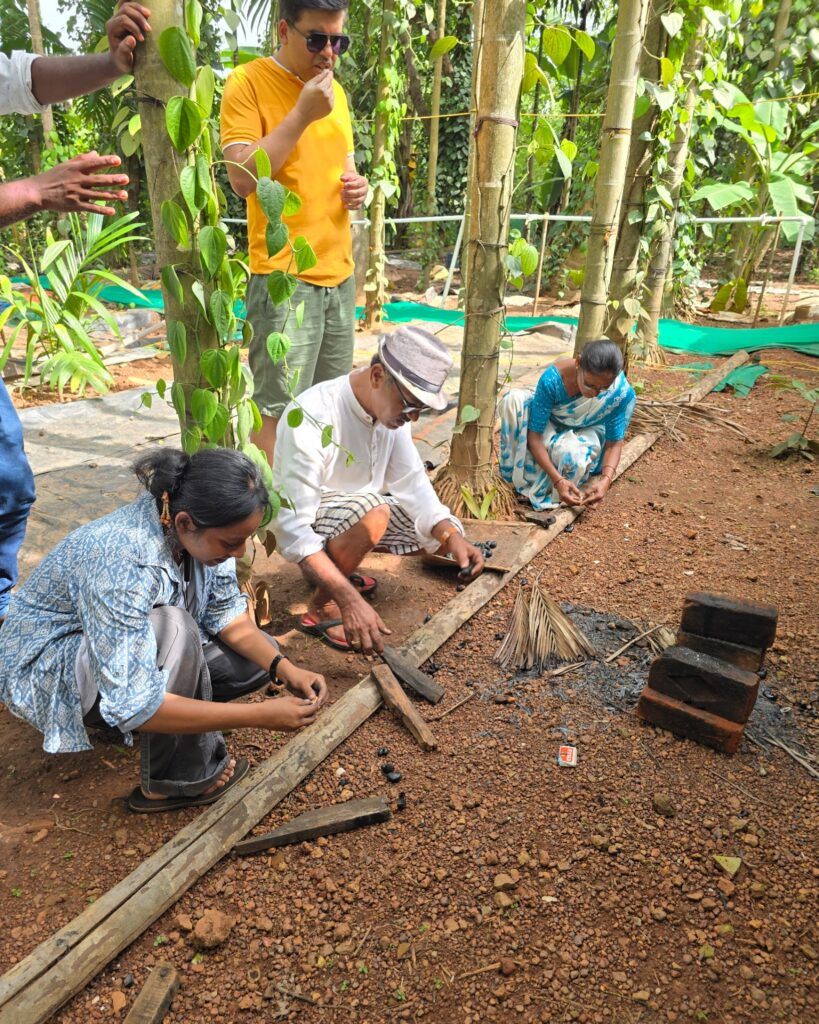
These mixed plantations are home to arecanut palms, coconut trees, pepper vines and a variety of spices and fruit trees that have supported Goan families for generations.
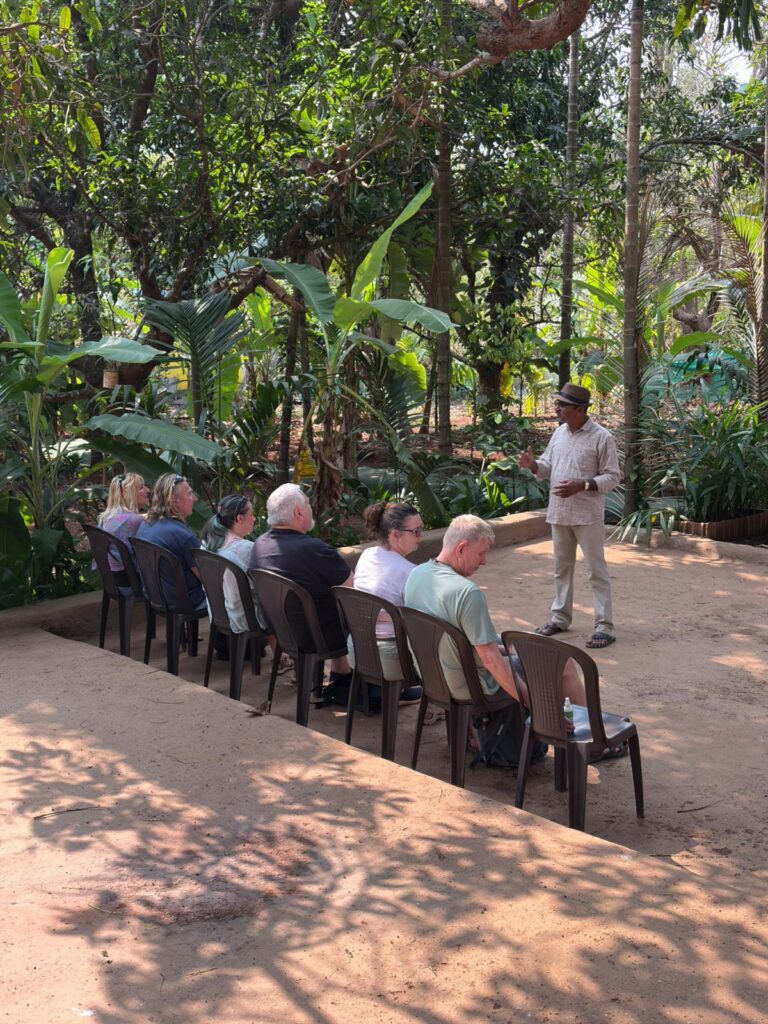
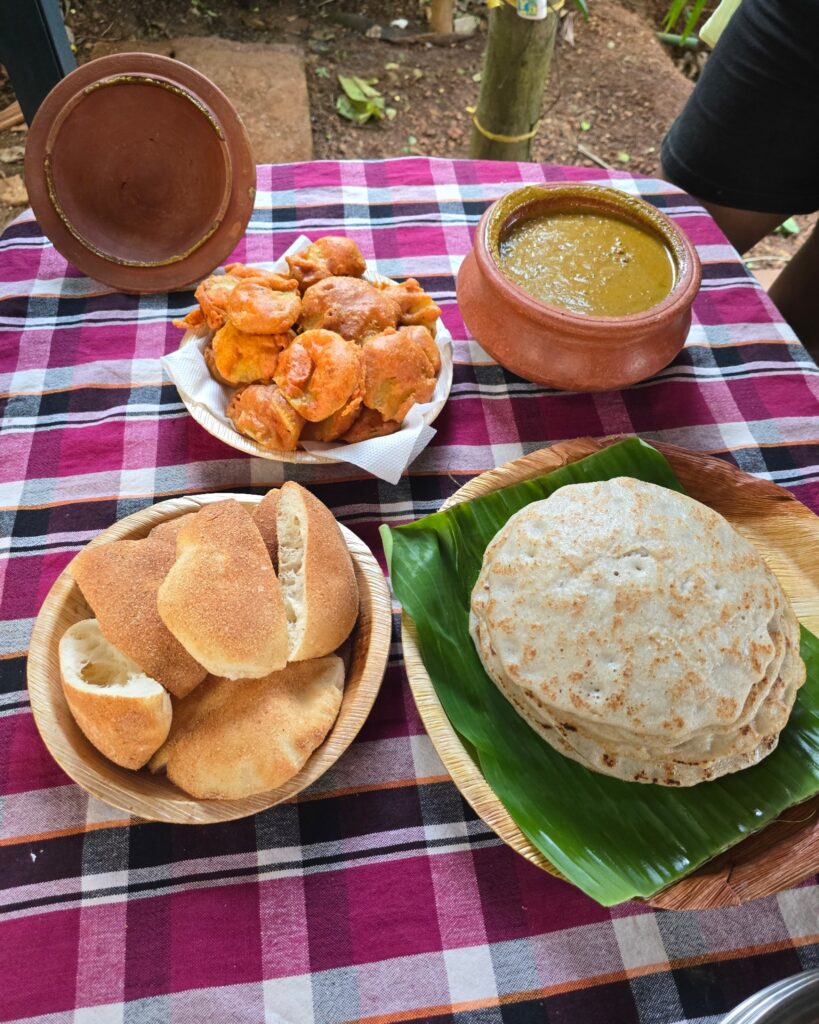
Rather than feeling like a commercial spice plantation, the experience is personal and relaxed. Visitors get an opportunity to learn about traditional farming practices while interacting with local hosts over tea and homemade snacks.
It’s one of the simplest experiences on the island, yet often becomes one of the most memorable because it offers genuine insight into everyday village life.
Time Required: Around 45 minutes.
Good For: Families, culture lovers and anyone wanting to experience authentic Goa beyond sightseeing.
Experience Goa’s Feni Culture
No visit to Chorao is complete without learning about feni, Goa’s iconic heritage spirit.
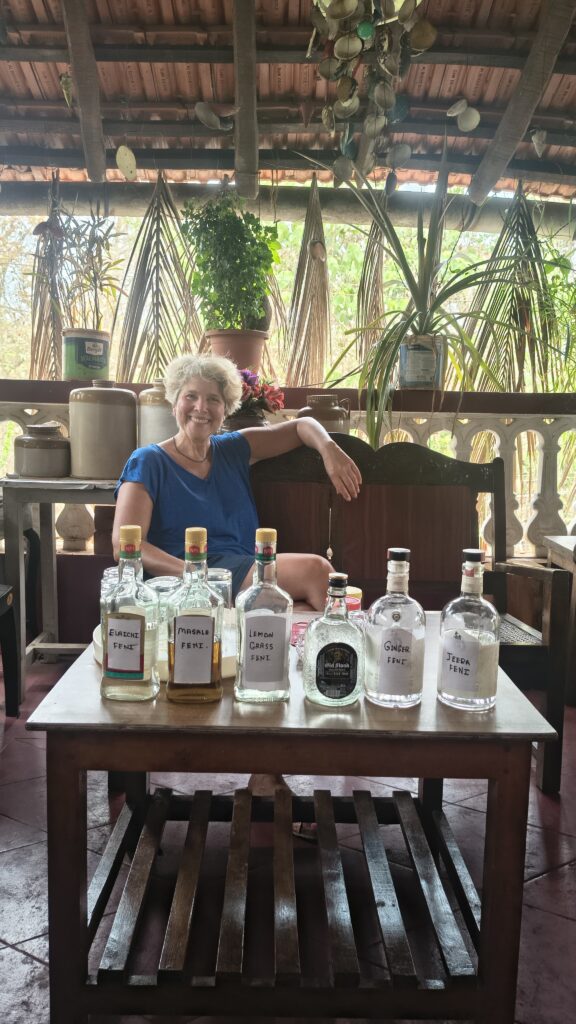
For those interested, a visit to a traditional local tavern such as Meenali Bar offers an opportunity to understand how feni is made, how it has evolved over generations and why it continues to be an important part of Goan culture.
Visitors who don’t consume alcohol or are travelling with young children can comfortably skip this stop without affecting the rest of their itinerary.
The experience is less about drinking and more about understanding a tradition that has shaped local communities for centuries.
Visit the Christ the King Viewpoint
Perched on higher ground, the Christ the King statue offers one of the island’s peaceful viewpoints.
Rather than dramatic cliffs or crowded viewpoints, this location offers a quiet place to pause, enjoy the breeze and appreciate Chorao’s slower pace of life.
It’s also one of the better spots to capture photographs of the surrounding countryside.
Discover the Dr. Salim Ali Bird Sanctuary
The Dr. Salim Ali Bird Sanctuary is undoubtedly Chorao’s best-known attraction, but it is far more than just a destination for birdwatchers.
The sanctuary protects an extensive mangrove ecosystem that supports an incredible variety of life.
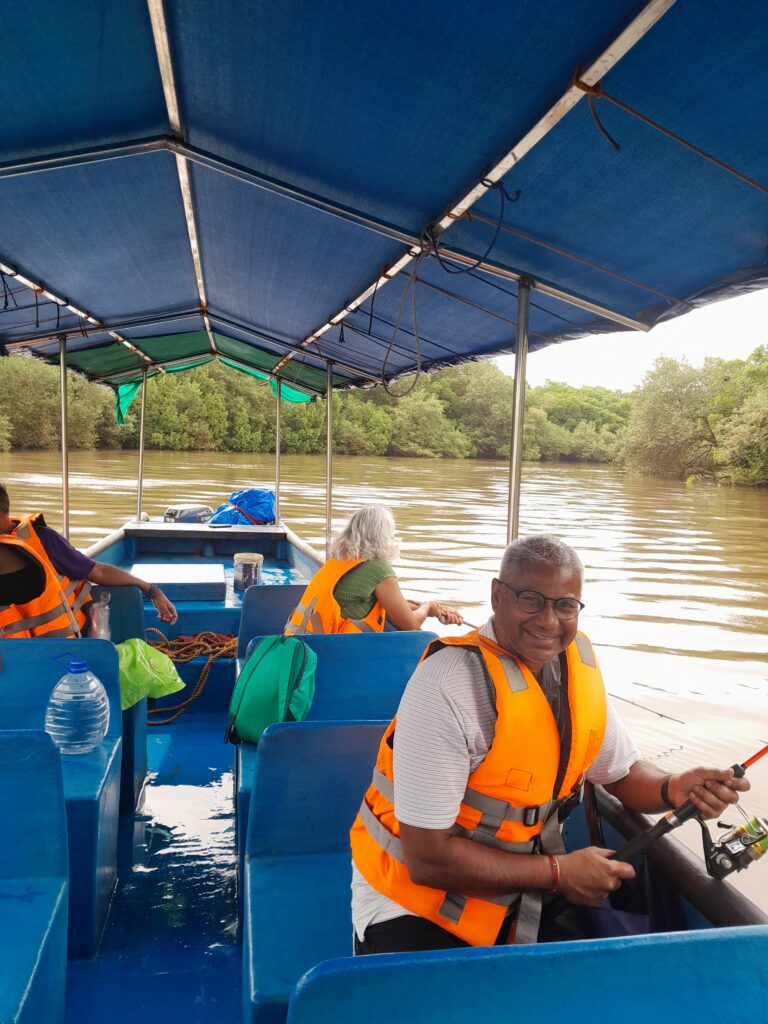
The best way to explore it is by boat.
As the boat glides silently through narrow mangrove channels, the sounds of the city disappear. Instead, you’ll hear the calls of kingfishers, the rustling of leaves and the constant activity of wildlife around you.
Depending on the season and a little luck, you may spot:
-
- Kingfishers
-
- Brahminy kites
-
- Migratory birds during winter
-
- Mudskippers
-
- Fiddler crabs
-
- Crocodiles resting along the banks
-
- Signs of otters that occasionally visit the area
The experience isn’t about rushing from one sighting to another. It’s about slowing down and appreciating one of Goa’s richest natural ecosystems.
For many visitors, this peaceful boat ride becomes the highlight of their day on Chorao Island.
Cycle Around Chorao Island
If you enjoy exploring at a slower pace, cycling is one of the most enjoyable ways to discover Chorao Island.
Away from the morning and evening rush, the island’s roads are generally quiet and pass through coconut groves, paddy fields, small chapels, traditional homes and scenic village lanes. Unlike the busy roads of North Goa, cycling here is less about speed and more about soaking in the peaceful surroundings.
Bicycles are not available for rent on Chorao Island itself, but they can be arranged from nearby villages before crossing over. If you’re unfamiliar with the island, joining a guided cycling tour is recommended. A local guide can help you navigate the lesser-known roads, share stories about the island and introduce you to places that don’t appear on most maps.
Time Required: 3 hours
Good For: Couples, photographers, nature lovers and slow travellers.
Explore the Kazan Lands
One of Chorao’s hidden treasures is its Kazan lands, a unique landscape shaped by generations of traditional farming and water management.
Protected by embankments and sluice gates, these fertile fields have allowed local communities to farm alongside Goa’s tidal rivers for centuries. As you travel through the island, you’ll notice how closely agriculture, fishing and village life remain connected.
Although they may seem like ordinary fields at first glance, the Kazan lands tell an important story about how Goans adapted to their environment long before modern engineering.
For travellers interested in understanding local life rather than simply sightseeing, this is one of Chorao’s most fascinating landscapes.
Time Required: 20 to 30 minutes
Good For: Culture enthusiasts, photographers and travellers interested in sustainable living.
Experience Traditional Fishing and Crab Catching
Life on Chorao has always been connected to its rivers.
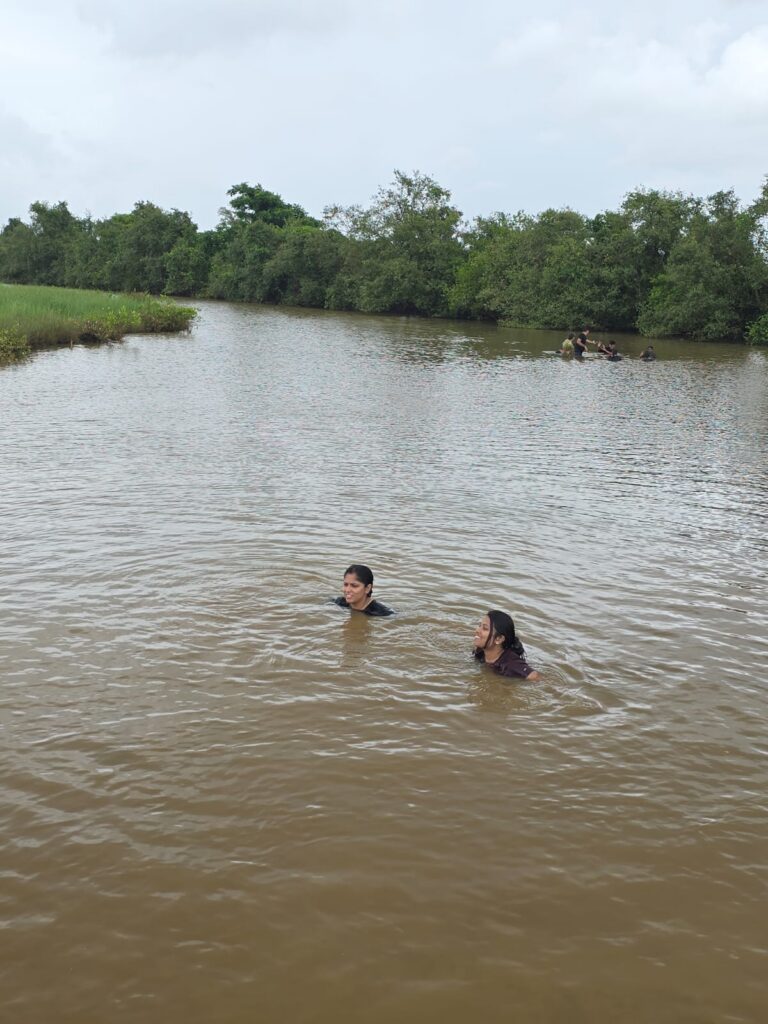
Depending on the tides and the season, visitors can observe or participate in traditional fishing and crab catching experiences guided by local fishermen. These are not staged demonstrations but real practices that continue to support families living on the island.
Watching these techniques provides a deeper appreciation of the relationship between the local community and the surrounding mangrove ecosystem.
As these experiences depend on weather conditions, tides and the availability of local fishermen, they are best arranged in advance.
Time Required: 2 hours
Good For: Families, curious travellers and anyone interested in authentic local experiences.
Enjoy Local Goan Hospitality
One of the most memorable parts of visiting Chorao isn’t a monument or a viewpoint. It’s the opportunity to slow down and spend time with local people.
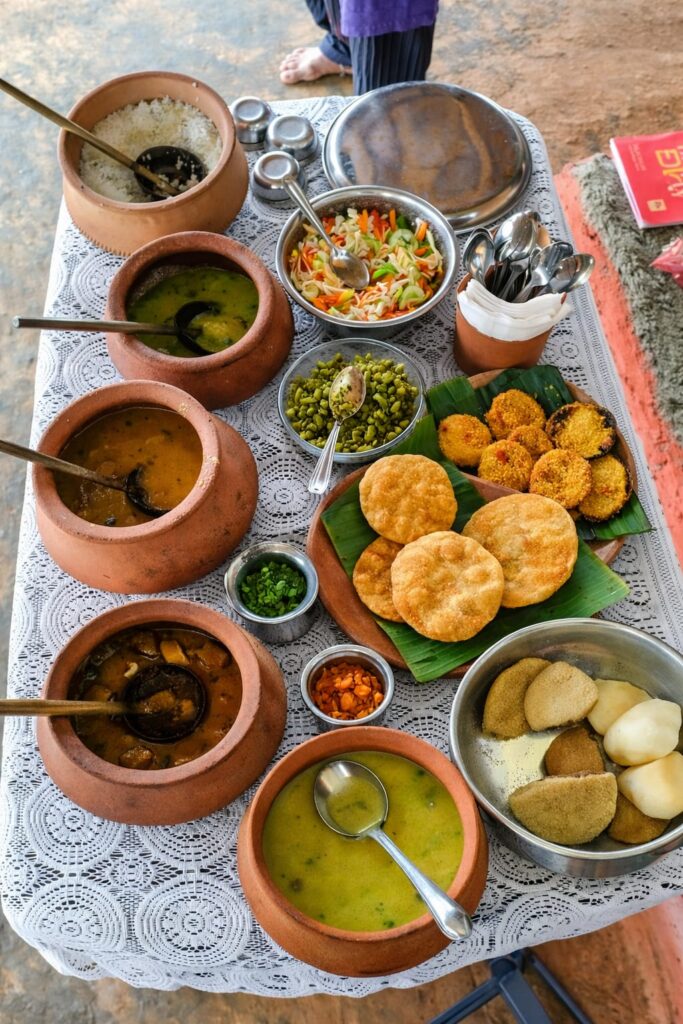
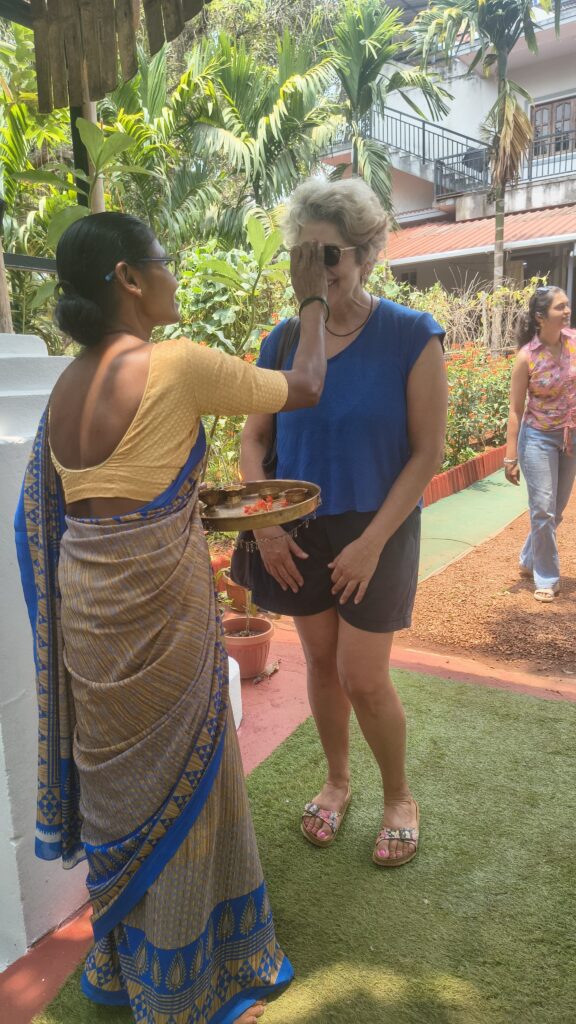
Whether you’re sharing tea and homemade snacks at a traditional Kulagar, listening to stories passed down through generations or simply chatting with residents, these small interactions often become the highlight of the visit.
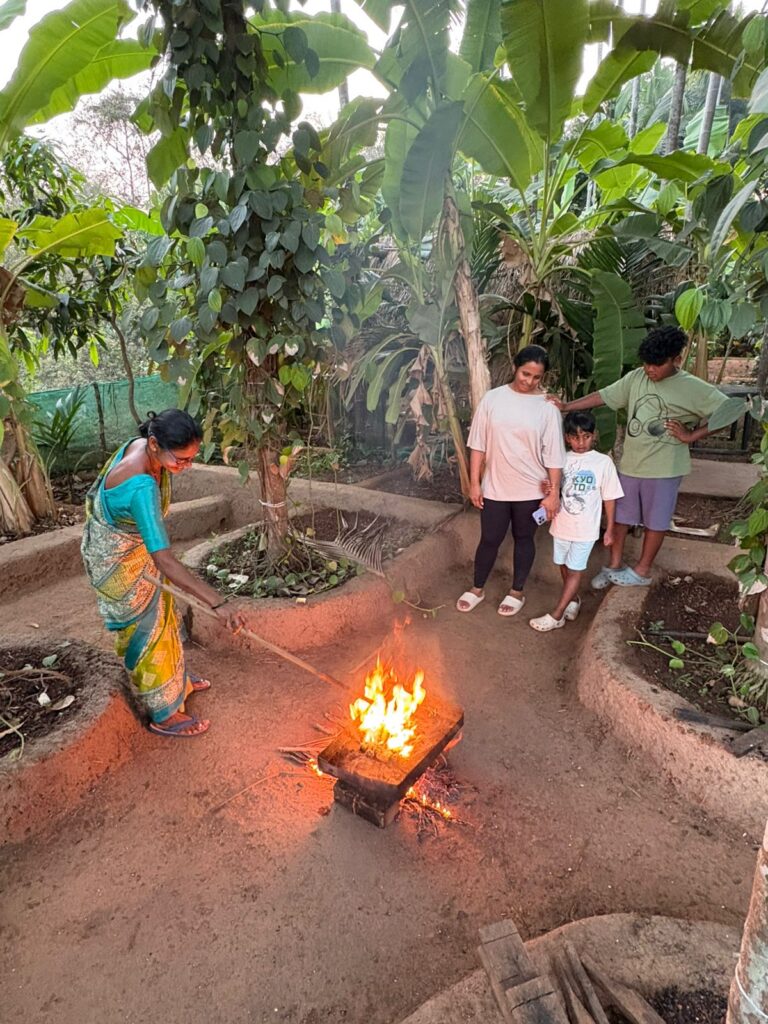
Unlike destinations built around tourism, Chorao still feels like a living village. Respecting that slower pace and engaging with the community is one of the best ways to experience the island.
Unsure if your current Goa itinerary is realistic?
Chat directly with a Top Goa Tours local expert on WhatsApp for free feedback before you book.
Suggested Half-Day Itinerary
If you’re short on time, it’s still possible to experience the highlights of Chorao in around four to five hours.
Morning
-
- Cross to Chorao Island via the Ribandar Ferry.
-
- Visit the Devaki Krishna Temple and learn about its unique history.
-
- Hike to the ruins of St. Jerome’s Seminary if you’re comfortable with a short uphill walk.
Late Morning
-
- Visit a traditional Kulagar.
-
- Enjoy tea and local snacks while learning about spices, farming traditions and village life.
-
- If interested, stop at Meenali Bar to understand the history and tradition of Goa’s famous feni.
Return to Ribandar by ferry.
This itinerary is ideal for travellers who want a relaxed introduction to Chorao while leaving enough time to explore other parts of Goa later in the day.
Suggested Full-Day Itinerary
If you want to experience Chorao beyond its landmarks, a full day allows you to explore the island at a much more relaxed pace.
Morning
-
- Cross via the Ribandar Ferry.
-
- Visit the Devaki Krishna Temple.
-
- Hike to the ruins of St. Jerome’s Seminary.
Lunch
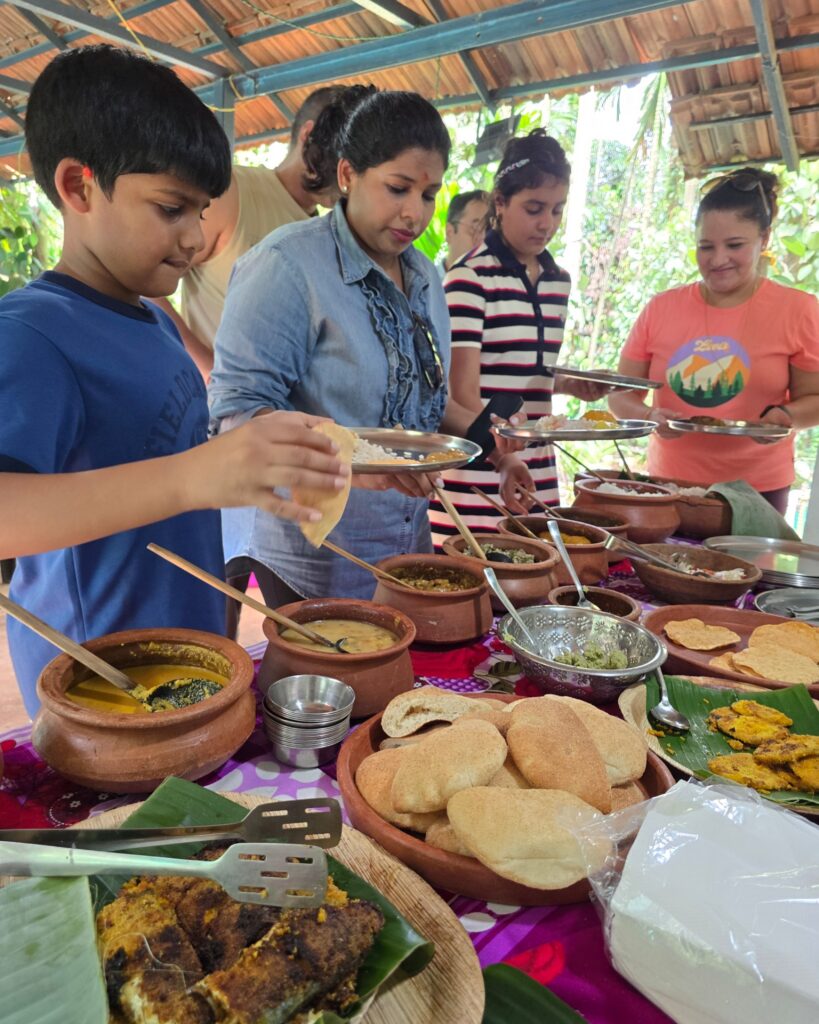
Enjoy a leisurely meal at a local eatery or indulge in a culinary experience at a farm before continuing your exploration.
Afternoon
-
- Visit a traditional Kulagar.
-
- Learn about Goa’s farming traditions over tea and snacks.
-
- Experience Goa’s feni culture at Meenali Bar (optional).
-
- Take a guided boat ride through the mangroves of the Dr. Salim Ali Bird Sanctuary.
-
- If time and conditions permit, experience traditional fishing or crab catching with local fishermen.
Return on the evening ferry while enjoying one final view of the Mandovi River.
Practical Tips Before You Visit
A little planning will help you enjoy Chorao at its best.
-
- Start your day early to avoid the afternoon heat.
-
- Carry drinking water, sunscreen and a hat.
-
- Wear comfortable footwear if you plan to hike to the seminary.
-
- Dress modestly while visiting the Devaki Krishna Temple. Sleeveless clothing and clothing above the knee should be avoided, and hats should be removed before entering.
-
- Drive slowly through the villages, as many roads are narrow and used by pedestrians.
-
- Ask permission before photographing local residents.
-
- Do not pick fruits or plants from farms without the owner’s permission.
-
- During the monsoon, some walking trails can become slippery.
-
- The bird sanctuary is most rewarding during the migratory season from November to February, although the mangrove ecosystem is beautiful throughout the year. Ideally Early Morning or Late Evening.
Frequently Asked Questions
How much time should I spend on Chorao Island?
A half day is enough to visit the major attractions, while a full day allows you to enjoy the bird sanctuary, village experiences and a slower pace of exploration.
Can I take my car or motorcycle to Chorao?
Yes. Both cars and two-wheelers can travel on the Ribandar Ferry for a nominal fee.
Are ferries available throughout the day?
Yes. Ferries generally begin operating around 6:00 AM and continue until approximately midnight. Services usually run every 10 to 15 minutes and more frequently during peak hours.
Is Chorao suitable for families?
Yes. Chorao is ideal for families looking for a peaceful day surrounded by nature and local culture. If travelling with very young children or elderly family members, you may wish to skip the seminary hike.
What is Chorao Island famous for?
Chorao is best known for the Dr. Salim Ali Bird Sanctuary, the Devaki Krishna Temple, its mangrove ecosystem, peaceful villages and authentic Goan culture.
When is the best time for birdwatching?
The migratory season from November to February offers the greatest variety of birds, although resident bird species can be seen throughout the year.
Explore Chorao Island with a Local Guide
Exploring Chorao on your own is a wonderful way to experience the island at your own pace. However, many of its most memorable stories, traditions and hidden corners aren’t immediately obvious.
Our curated Chorao Village Tour is designed for travellers who want to go beyond sightseeing. Beginning at the ferry point, your local guide introduces you to the island’s history before taking you through a carefully planned experience that may include the Devaki Krishna Temple, the ruins of St. Jerome’s Seminary, a traditional Kulagar, tea and local snacks, and an optional introduction to Goa’s feni culture.
Every experience is customised based on the group’s interests, age and fitness level, ensuring a relaxed and meaningful day rather than a fixed sightseeing schedule.
Whether you’re passionate about heritage, nature, photography or local culture, we’ll help you experience a side of Chorao that many visitors never discover.
Notes From Our Local Guides
I’ve explored Chorao with guests of all ages, and one thing I’ve learnt is that the island reveals itself differently to everyone.
Some remember spotting a crocodile along the mangroves. Others talk about the stories behind the Devaki Krishna Temple or the forgotten seminary. Many simply remember sharing tea with local hosts and realising that some of Goa’s most meaningful experiences happen away from the beaches.
Chorao isn’t a place that impresses you with grand monuments. It wins you over through its quiet roads, its people and its stories.
If you arrive with curiosity and take the time to slow down, you’ll discover a side of Goa that feels authentic, welcoming and beautifully unhurried.
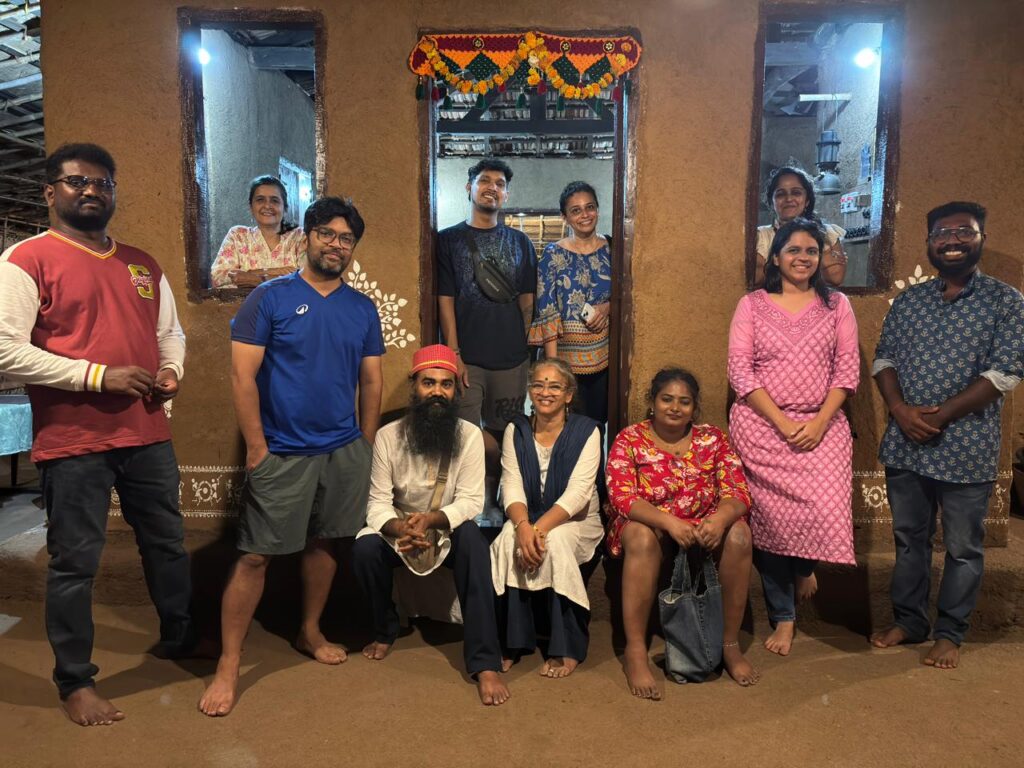
Plan Your Goa Experience
Let us design a curated experience based on your interests, group size and duration so you can explore the best of Goa.
Loved this guide?
We post real trip photos, reels and behind-the-scenes moments from Goa on Instagram — follow along for more.